Monday, March 19, 2007

The Paley Festival


For the past eighteen years, Tim, Karen and I have blocked-off the first two weeks in March for the Paley Festival, a multi-day film-and-panel-discussion event sponsored by the Museum of Television and Radio (MTR). Although older series, like “Hill Street Blues” and “The Odd Couple,” are occasionally honored, the Festival is mostly about the hottest new shows of the season. Over the years, we’ve attended events celebrating “Lost,” “Desperate Housewives,” “Boston Legal,” “24,” “Battlestar Galactica,” “Everybody Hates Chris,” “X-Files,” “The Wonder Years,” “Freaks and Geeks,” “Friends,” “Bernie Mac,” “Deadwood,” and “China Beach,” to name just a few. In 1990, we sneak-previewed “Twin Peaks” a week before it aired on TV. I remember going to work the next day and proclaiming that I had seen the future of television!

A typical Paley event begins with the screening of an episode of the show being honored, followed by an extensive Q&A with the series’ cast and creative team. If a single personality, such as Jack Parr, William Shatner, or Carl Reiner, is being honored instead of an entire series, then a clip-reel is shown recapping that person’s career. A moderator then launches into an “Actor’s Studio” type of interview that is often very funny. Shatner was a revelation—one of the best raconteurs I’ve ever seen—and Parr, of course, was brilliant. But, by far, one of the most memorable evenings was listening to Reiner and his pals talk about the golden age of television. The festivities take place at the smallish Director’s Guild of America (DGA) theater, so it’s always an intimate affair.

In the old days, Karen and I would get up at the crack of dawn to stand on line for six hours to get tickets. This year, however, the Museum decided to outsource its ticket sales to Ticketmaster—a big mistake! By the time I logged on (9:05AM), “The Office,” “Heroes,” and “Ugly Betty” were already sold-out! Never in eighteen years had we been sold-out of shows we wanted to see! I was furious and made a trip to the Museum (in Beverly Hills) to air my displeasure. When I told the volunteer at the reception desk I wanted to complain about how the Paley tickets were handled, he laughed and said, “You and everyone else!” I was offered a million apologies along with promises to do better next year, but there was nothing more they could do this year.

Although we didn’t get tickets to the three shows we really wanted to see, Karen and I were able to attend the “Brothers & Sisters” event on Monday, March 5. The lobby was a frenzy when we arrived. Photographers madly waved their arms and yelled as the show’s stars walked the short red carpet outside the theater. I headed toward the ladies room and was almost wrestled to the ground by a bodyguard who evidently thought I was going to rush the red carpet. “I need to get some water and then I’m going to the bathroom. Is that all right?” I asked indignantly.

The event itself was pleasant, but less than memorable. Sally Field, who plays the widowed mother Nora, got the biggest applause even though the show is supposed to belong to Calista Flockhart. Field looks exactly like she does on television and had no trouble playing the elder spokeswoman on stage. The other big crowd pleaser was Jason Lewis, who plays the gay brother’s love interest and was Samantha’s much younger hunky boyfriend in “Sex and the City.” Although he wasn’t part of the on-stage entourage, he caused quite a stir when he stood and waved to the audience.

Flockhart, who plays Kitty, is only slightly less skinny in person than she is on TV. Still, she’s obviously adored by her male costars (don’t ask me why!) She sat between Rob Lowe, her on-air boss/boyfriend, and Dave Annable, Kitty’s youngest brother, and affectionately flirted with them the entire time. When asked why he auditioned to be part of “Brothers & Sisters,” Annable quipped that he wanted to meet Harrison Ford (Calista’s very famous significant other).

And speaking of significant others (beware: spoiler alert!), it was revealed that Nora is about to get a new love interest: Peter Coyote, who just happened to be in the audience.

With that, our one Paley evening was over...

That is, until two days later when Tim miraculously got a phone call from MTR, saying two tickets had been returned for “Ugly Betty!” Did we want to go? I can only guess that my little chat with Museum staff had left an impression! So the following Monday, Tim and I headed back up to Hollywood to see “Ugly Betty,” even though I had been home sick all day. There was no way I was missing this!

The entire cast, except Tony Plana (the father) and Ana Ortiz (the sister), were there. Vanessa Williams is simply gorgeous and Rebecca Romijn is statuesque. Ashley Jensen, the frumpy dress designer, is a lot more beautiful in person—as is, of course, America Ferrera (Betty), for whom the show was written. The happy chemistry among the actors was palpable and everyone seemed genuinely humbled to be part of such a hugely successful show. Ferrera cried when she described what an honor it is to play Betty. But the evening truly belonged to Michael Urie, Wilhelmina’s gay assistant, and Mark Indelicato, Betty’s young fashion-savvy nephew. Urie is as flamboyant as his on-air character and Indelicato is wonderfully self-assured. All the cast members talked about how liberating it is to be part of a series that celebrates individuality and uniqueness.

I can’t wait to see which shows are honored next year...

3/19/07

Sunday, March 04, 2007

The L.A. Marathon


One of the first things I mark on my calendar every year is the L.A. Marathon, which always occurs on the first Sunday in March (today). Not only are we the only people I know who actually watch the marathon (on TV) from start to finish, but the streets around the race route (and beyond!) are always so horribly impacted that it’s almost impossible to travel anywhere north of Culver City the entire day. Karen and I were going to go to the Pasadena City College flea market this morning, but canceled when we realized we’d have to cross the race route at least once no matter which way we went. Better to stay home and just watch the race.

The beginning and end of the marathon are always the most exciting: hearing the inspirational story of at least one breast cancer survivor who runs the 26-mile course to celebrate her new lease on life, and then at the end cheering for the lone woman runner who looks like she might beat the men but never does. Very motivational.

But for us, the best part of the marathon is seeing some of our favorite parts of L.A. on television as the runners race by. This year, the course started at Universal Studios, north of Hollywood, and ended in front of the Los Angeles Public Library in downtown L.A. Once the TV is on, it’s a constant commentary between Tim and me as the camera rolls by numerous local landmarks.

Mile 1: “There’s the fire station on Cahuenga! Yikes, can you imagine running up that hill?!”

Mile 3: “They’re making the Franklin Avenue curve in front of the Presbyterian church! ‘Hollywood Bowl parking—No stacked parking!’” (We’ve walked down that hill. I can’t imagine running down it in a horde of 25,000 people! How do the runners keep from getting trampled to death?)

Mile 4: (Tim) “They’re turning right at Hollywood and Vine!” (Me) “Haven’t they finished converting that building into condos yet?” [talking about the building where Tim used to work]

Mile 4.1: (Tim) “THERE’S MOLLY’S!!” [in a weepy voice, remembering lunches of yore] (Molly's is Tim’s favorite Hollywood hot dog stand).

Mile 6 (Hancock Park, where Vine turns into Rossmore): (Me) “Looks like all the rich folks are still sleeping—not many people cheering from the sidewalks.” (Tim) “Or maybe they all went to Santa Barbara for the weekend...”

Now bored (not our favorite part of town), I hop into the shower, but am out in time for Exposition Park and environs.

Mile 13: “There’s the Coliseum!” (followed by a brief infomercial touting the beauty and cultural advantages of the Exposition Park area. Huh?)

Mile 14: “I see USC!”

Mile 22: (Tim) “They’re crossing the L.A. River!” (Me) “There’s the downtown Sears!” [getting excited again]

At Mile 23, the runners head west as the camera suddenly pans toward downtown L.A. The view is breathtaking and for a (very!) brief moment I wish I was dashing toward the finish line. The men overtake the sole woman runner (a 45-year-old Russian) in the last mile and then it is all over. Along the way, we heard the story of a woman who had lost 100 pounds, which she keeps off by exercising. We also saw a blind man running his third (!!) marathon and watched a father pushing his disabled daughter in a stroller.

Maybe we should actually participate in the marathon next year, even if we only walk two miles and then jump onto the subway. To get in shape, I’ll start by walking around the block as soon as this year’s winners are crowned.

3/4/07
Monday, February 05, 2007
Philadelphia

A month ago, I was invited to lead a couple of workshops in Philadelphia. It was a brief affair—two travel days plus two days in town--but the memory still burns bright.

Forget “Rocky” and the TV show “It’s Always Sunny in Philadelphia.” The City of Brotherly Love is beautiful and reminds me a lot of NYC, but without the crowds. It is, of course, also totally historic. Benjamin Franklin not only walked these streets, he’s actually buried here, too. In fact, the man is considered a god in Philadelphia, with everything from monuments to pawn shops named after him.

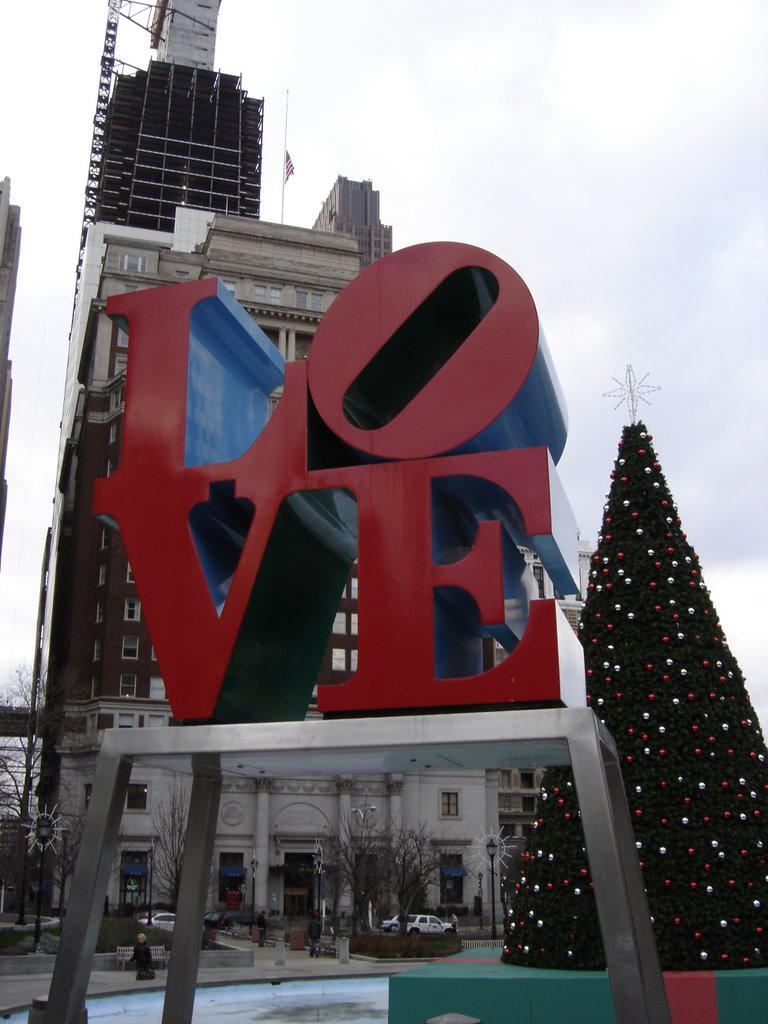
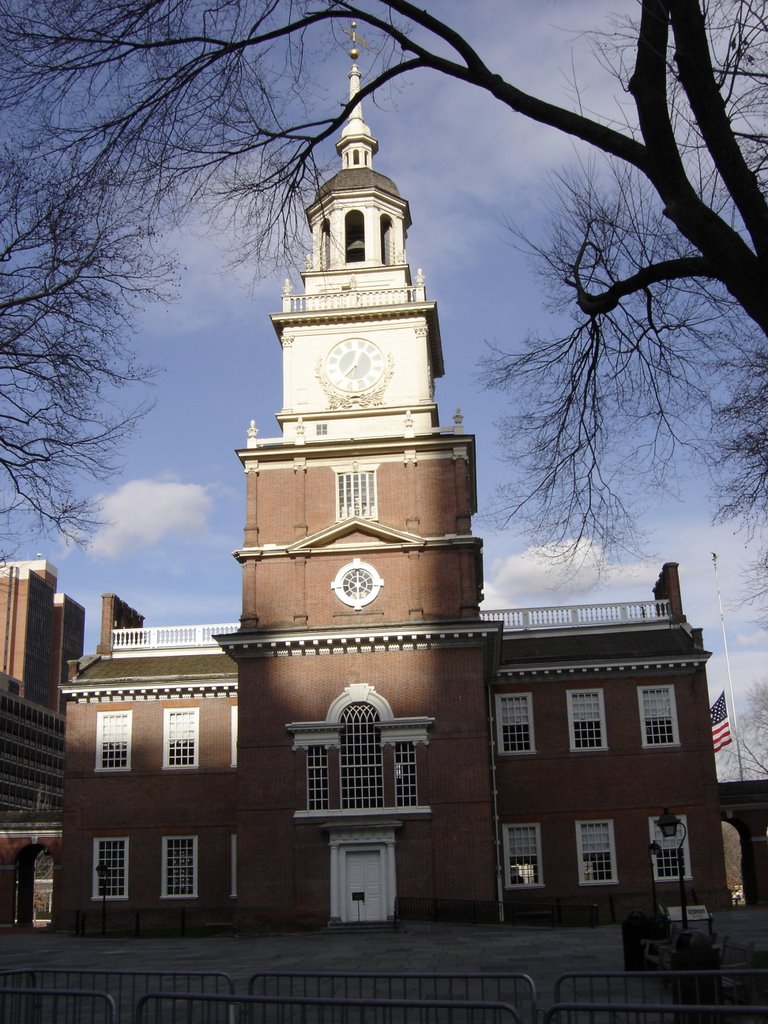
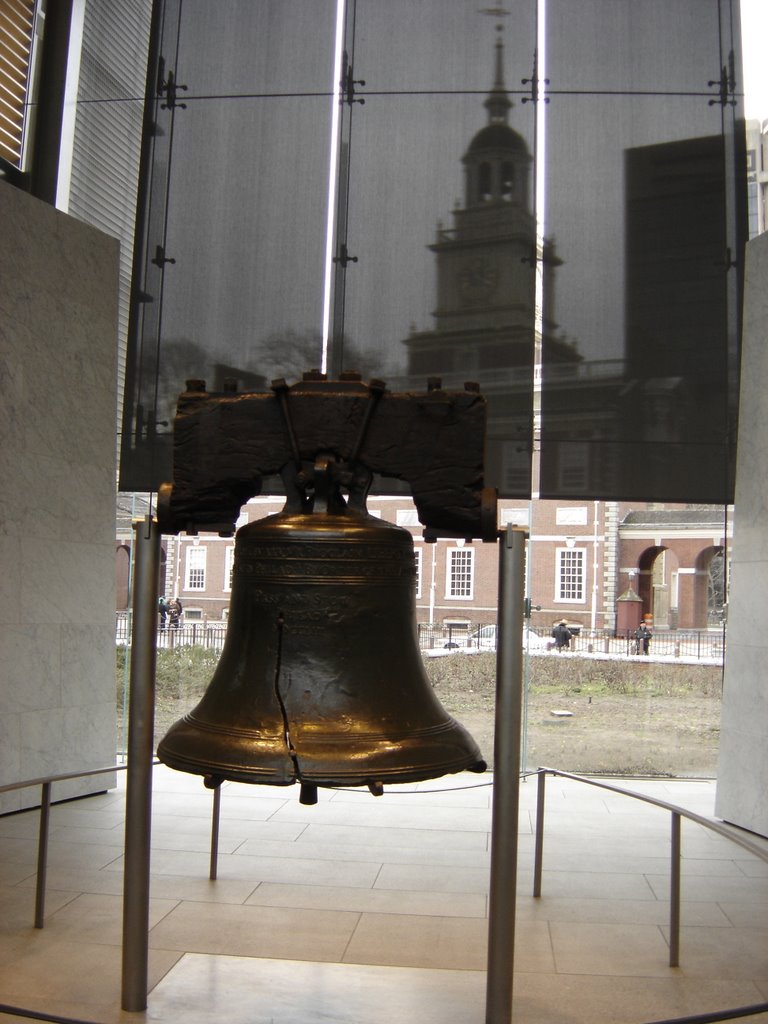
Since I had only one day to sightsee, I decided to take one of those at-your-own-pace trolley tours to get an overview of the city. My first stop was the Liberty Bell and Independence Hall, where I spent two hours reliving the birth of the USA.

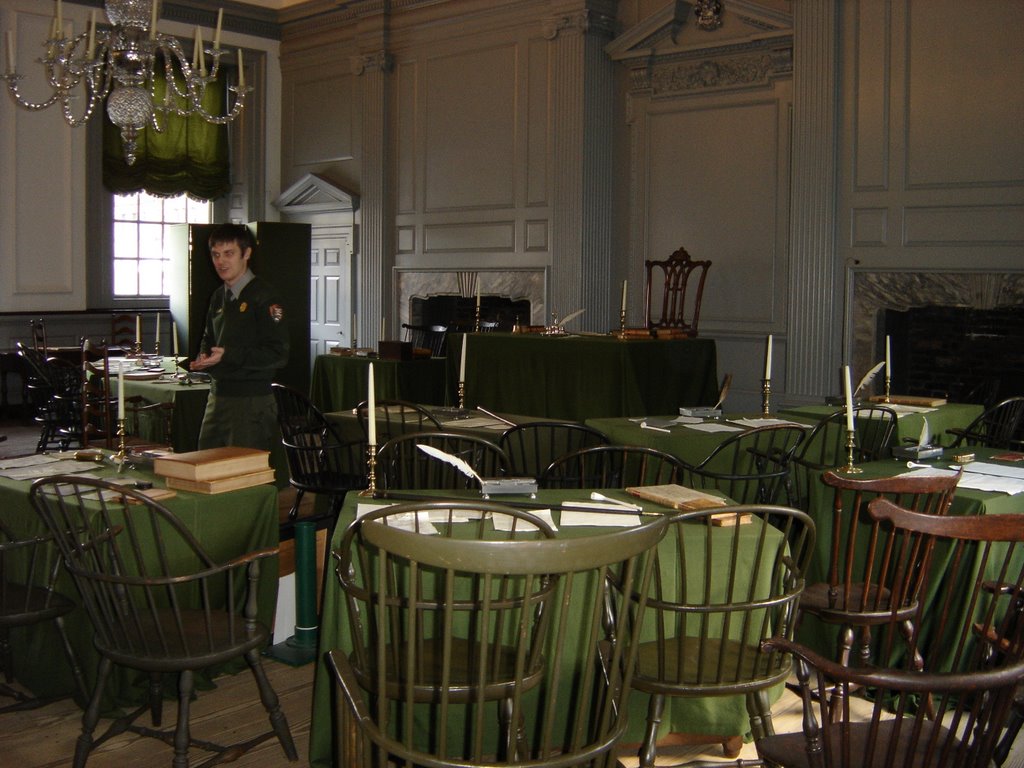
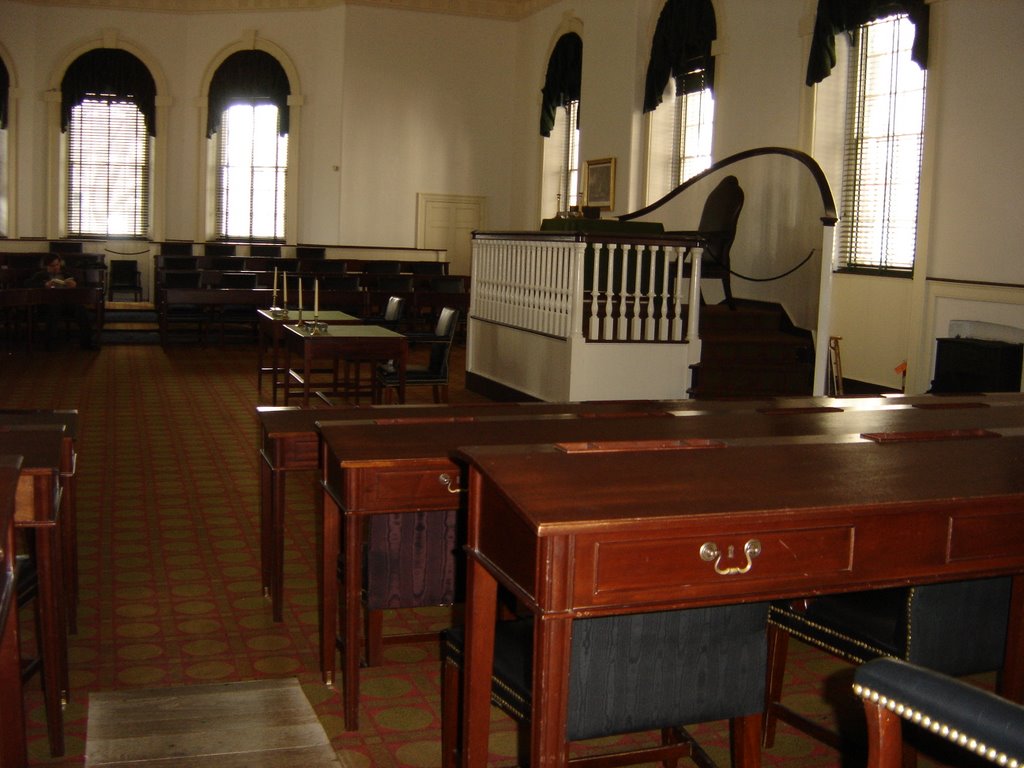
Now I’m not a religious person, but I do appreciate the sanctity of certain places and things. Every American citizen should consider these sites hallowed ground—ground that’s protected by metal detectors and security guards, but hallowed nonetheless. Indeed, the Liberty Bell, which used to be out in the open for anyone to see and touch, is now housed in a new facility where it is treated as something of a holy relic. It stands across the street from Independence Hall, where the Declaration of Independence was signed and where the Constitution—the blueprint for all democracies that have come after—was drafted. I was especially moved by the Hall’s Assembly Room, where the founders debated the future of their fledgling country behind closed curtains. Here was the actual chair where Benjamin Franklin (or was it Thomas Jefferson?) sat as the men climbed the short dais, one by one, to sign the Declaration.

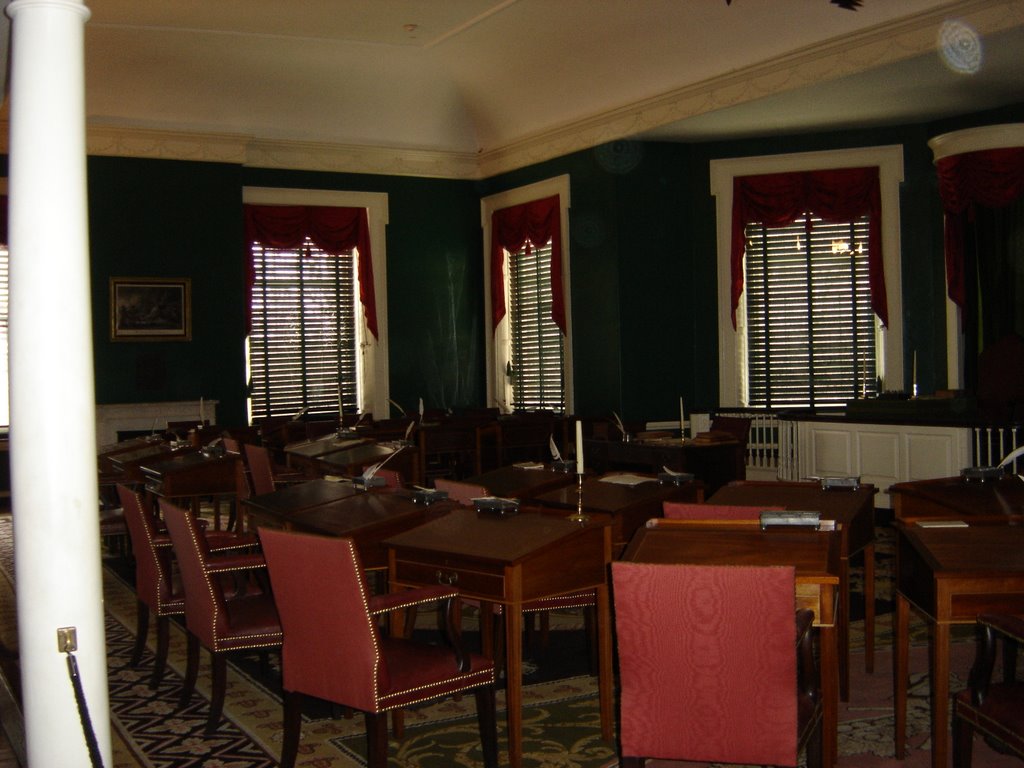
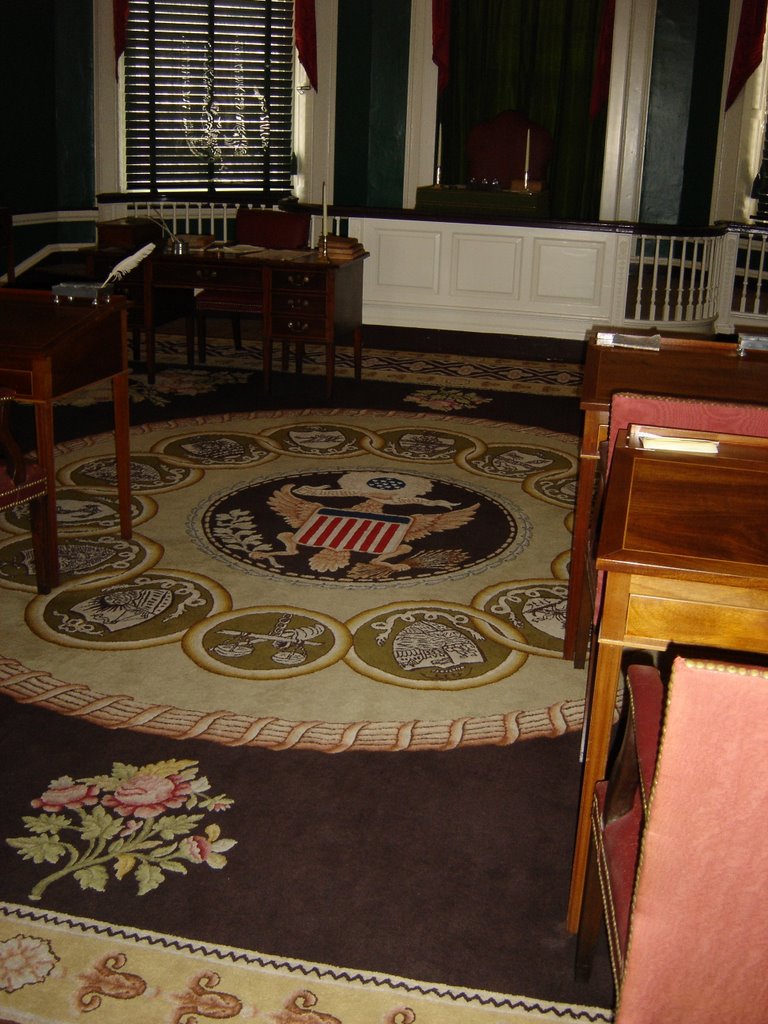
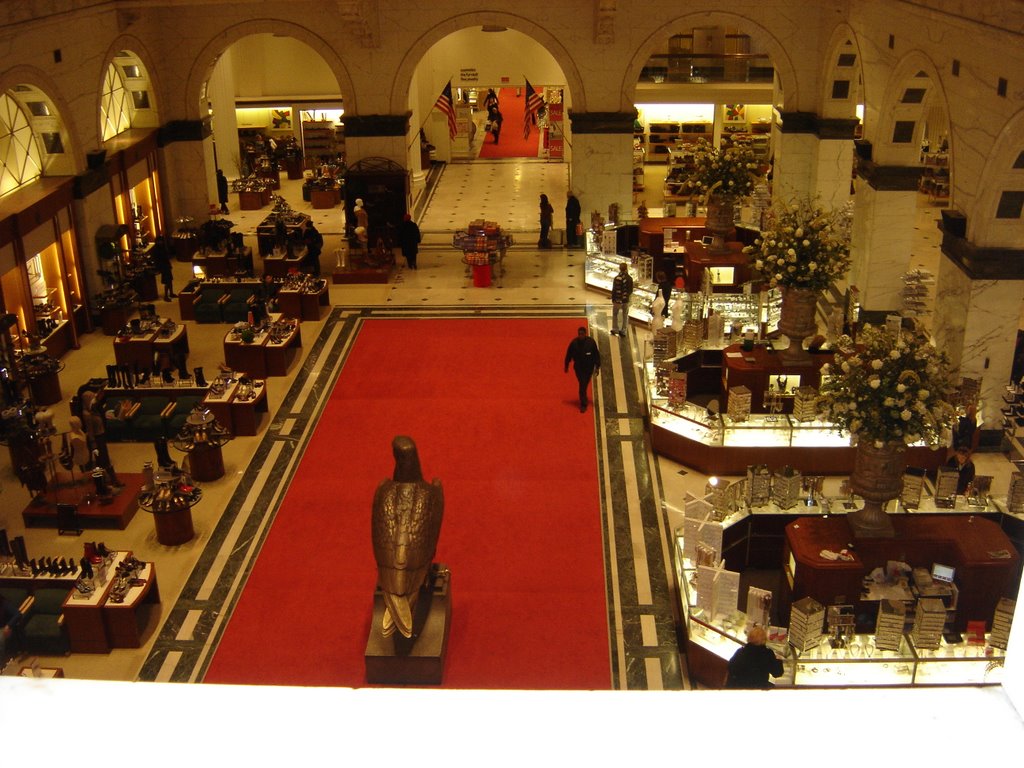
Even more moving, though, was entering Congress Hall two doors west of Independence Hall. (I had no idea that Philadelphia served as the nation’s capitol, from 1790 until 1800, while Washington D.C. was under construction). Downstairs was the House of Representatives chamber, with its nondescript wooden desks and plain white walls. Upstairs, however, was an entirely different story. Just as it is today, the early Senate was, by far, the more prestigious of the two Congressional houses as is immediately apparent by their chamber’s lavish furnishings. Plush green wallpaper and red velvet curtains speak to the importance of the Senate’s governmental role. And there were twenty-six beautifully appointed desks, reminding everyone that the U.S. started with thirteen states (two representatives from each, as it is today). The picture (to the left) of the eagle-emblazoned carpet was taken from the exact spot where George Washington was inaugurated during his second term as president. Every student of early American history should stand in that spot.

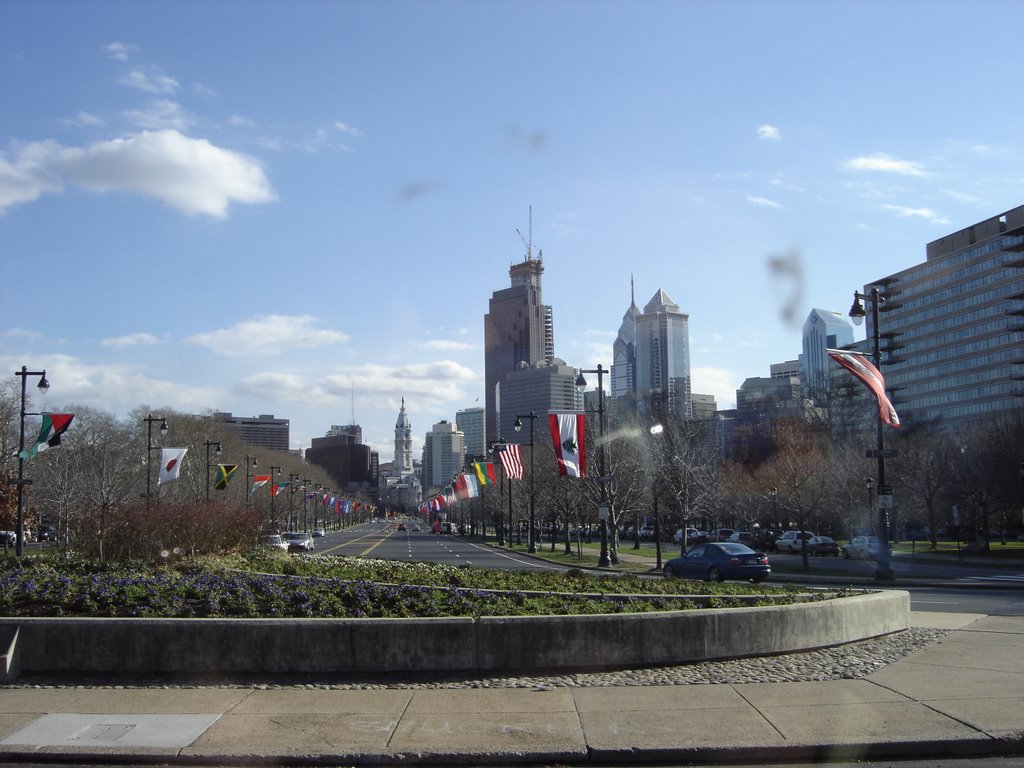
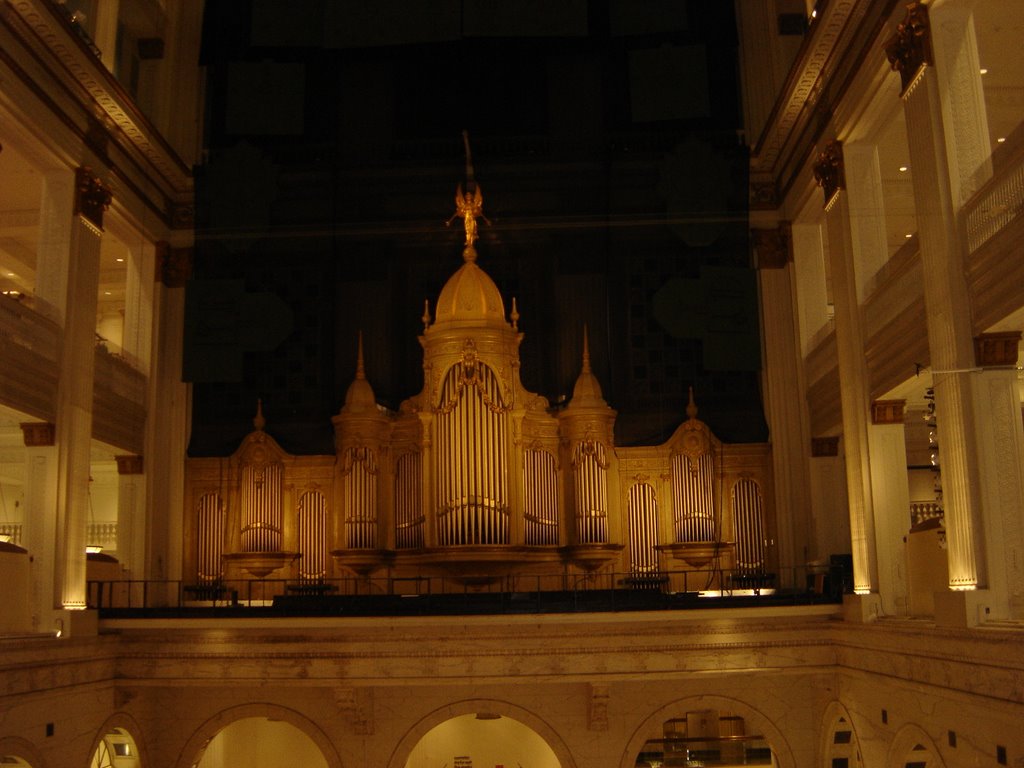
From Independence Hall, I hopped the trolley to other sights, including Betsy Ross’s house, the art museum (where Rocky made his triumphant ascent), the avenue of flags, and Society Hill. Back at Independence Hall, I decided to walk the two miles to the hotel (the temperature was in the upper 40s—a real heat spell for early January) and visit some of the sights we’d quickly driven by. I stopped in the Reading Terminal market—similar to downtown L.A.’s Grand Central, but without carnitas tacos—for lunch, and then wandered over to Macy’s (formerly Wannamaker’s), which houses one of the largest operational pipe organs in the world. Built in 1904 for the St. Louis World’s Fair, the organ was moved in 1911 to Wannamaker’s department store, where it’s been ever since. Located above the cosmetics counters, on the second floor of a phenomenal marble-lined atrium, the two-story-tall organ entertains customers twice a day at noon and dinnertime. I missed both concerts that day, but now have a good excuse to return to Philadelphia!

Perhaps Tim and I will take a trip back east next fall...

2/5/07

Saturday, January 27, 2007

On the Road (Again!)


I travel a lot. Not only do I have an office in Sacramento, but I also conduct workshops around the country and attend conferences. I’ve already gone on three trips this year and it’s only January!

The irony, of course, is that I would be just as happy staying home in my conventional Culver City neighborhood. I always feel like I’m missing something important when I leave L.A.; plus, I HATE to fly. This isn’t just grumpiness over airport security or the discomfort of being shoehorned onto an airplane. This is a true fear of falling out of the sky. I will never see the movie “United 93” and the plane crash scenes in “Lost” always send me running out of the room.

So how do I do it, over and over again? Well, I’ve discovered I pass through five emotional stages when coping with the trauma of travel (with sincere apologies to Elisabeth Kübler-Ross!):

1. Excitement - especially when I’m planning to return to a place I love (e.g., NYC, Hawaii) or when I’m traveling to a place where people I love live (e.g., Seattle). Then there's the fun of finding the cheapest airfares and hotel rooms, as well as hunting down theater events or other things to do.

2. Regret - as soon as I book my trip, I begin wondering how I’ll survive five hours in the air. Will the flight be bumpy? Will it be snowing/raining/foggy/unbearably hot when I arrive? About a week before my trip, I suddenly become obsessed with weather reports, looking for any excuse not to go. “What was I thinking when I said I’d lead a workshop in Philadelphia in JANUARY?!!”

3. Anger - especially when I realize all the fun things I’ll miss because I’m going out of town. “Whaddaya mean you’ve got free sneak preview tickets to the new George Clooney movie? That’s the week I’m in Ohio!!” My crankiness is further compounded by the new regulations limiting carryon items. Because some guy in Great Britain knows how to make explosives out of deodorant and a stick of chewing gum, I now have to squeeze all my cosmetics into a quart-sized ziploc bag. (I’m sorry, Mary Kay, but there’s only room for one jar of facial cream!) You know the world has gone crazy when lipstick and a tube of black mascara are considered lethal weapons!

4. Terror - stomach aches and sleepless nights; but even worse is the fear of forgetting to print my Southwest boarding pass until it’s too late to get on the A line! Such dread can only be surpassed by a white-knuckle cab ride to the airport. Luckily, we live only ten minutes away from LAX, so my husband usually plays chauffeur.

5. Acceptance - once I’ve made it safely through security and have found my gate, I start to settle down and accept my fate. “Surely the pilots won’t risk their own lives by doing anything foolish!” I always tell myself, keeping my fingers firmly crossed. On the plane, I plug into my headphones and push “shuffle” on the iPod. Frank Sinatra, Sting, the Beatles, Neil Young, and Steely Dan are all my best friends as I wing my way to my next destination.

Then, of course, there’s the trauma of finding a cab/shuttle/train to the hotel; but at least I survived another flight.

And most people fear public speaking more than anything else. Ha! When’s the last time you had to run your lipstick through a metal-detector before speaking in front of a room full of conference-goers? I’d rather conduct a full-day workshop in Los Angeles than fly to somewhere more exotic any day.

1/27/07

Wednesday, December 20, 2006

All You Need is Love


Like many people my age, I love the Beatles. Among my most prized possessions is a numbered print of an early Beatles portrait taken by Dezo Hoffman, which I bought in an art gallery several years ago. I also have a framed copy of “Goodnight Vienna” that Ringo Starr signed while visiting Tim’s radio station. My favorite Beatles poster, which I bought when I was nine years old, has hung in every one of my homes since 1963.

I consider myself more “fan” than “fanatic,” but I do remain a Beatles “purist”—that is, I prefer their studio recordings as they appeared on the albums sold in the US. I can barely stand hearing their songs played live, let alone covered by someone else. Bottom line: don’t mess with the Beatles.

It was quite a surprise, therefore, when I immediately fell in love with an acoustic version of George Harrison’s “While My Guitar Gently Weeps” while listening to “Breakfast with the Beatles” a couple of weeks ago. Turns out the song was a cut from “Love,” the soundtrack to Cirque du Soleil’s tribute to the Beatles. The show has been playing in Las Vegas for several months, but I really had no desire to see it until I heard the music. As soon as the song ended, I picked up the phone and bought a ticket to the show. The timing couldn’t have been more perfect as I was already going to Vegas to attend a wedding (see blog posting 12/17/06).

I suspected the wedding reception would run long, so I made a reservation for the 10:30PM show. Sure enough, I barely had time to put my feet up back at the hotel, before I was hailing a cab to take me a half-mile down The Strip to the theater. Nine dollars later, I found myself strolling through the Mirage looking for “Love.” When I asked the bell captain for guidance, he pointed in the general direction of the casino. At first, I got distracted by the Revolution bar, a sleek affair decorated in updated 1960s furniture, but then found the box office, where people were already starting to queue up for the show.

I was more than an hour early, so made my way over to the Beatles gift shop, strategically placed right outside the theater. I must say that this was some of the best Beatles merchandise I’ve ever seen: interesting t-shirts and other high-end, artsy wares. I could have easily spent several hundred dollars buying memorabilia, but instead settled on an oversized, limited-edition crystal plate decorated with the Sergeant Pepper emblem. I asked the saleswoman, who was thrilled to meet me, to hold it until after the show.

By now, people were milling around the lobby, buying concessions and listening to Beatles music played overhead. The audience (mostly baby-boomers) waited anxiously for the doors to open. Some sang quietly to themselves; others, like the guy next to me, danced in place. Finally, the ushers (dressed like British bobbies) directed us inside.

The stage looked a lot like the big tent Cirque du Soleil sets up when it visits Los Angeles. The theater was bowl-shaped with seats surrounding the proscenium. Four floor-to-ceiling scrims divided the space into quarters. I was worried that my view would be blocked, but, of course, the scrims were raised as soon as the action began. Beatles music played as people poured in.

While I was sitting there, a rather important-looking man came over and started chatting with an older couple behind me. Apparently he was the stage manager because he was soon regaling all who listened with stories of how this had previously been the famous Siegfried and Roy theater. “The tigers were kept in cages right under where you’re now sitting,” he embellished. “They had to dig down six floors to get rid of the animal smell. It STUNK in here!”

The bobby-ushers came around to warn us not to grab at anything that might project above us during the show (!) And then suddenly the lights went down and the show began.

Although there’s no real plot, the storyline loosely follows the Beatles’ lives and music, starting with their childhood during World War II and ending with “Hey Jude.” We saw screaming fans, a pregnant Lady Madonna, “Lucy in the Sky with Diamonds,” and a circus for “The Benefit of Mr. Kite.” “Octopus’s Garden” was filled with luminescent jellyfish, squids and fluttering seaweed. Acrobats performed amazing fetes on trampolines for “Back in the U.S.S.R.” But the most memorable acts, by far, were those performed to George Harrison’s songs. “While my Guitar Gently Weeps” was especially moving, with delicate four-story-tall puppets swaying gracefully to the music. I almost started weeping myself.

And then it was over. Most of us seemed to float toward the doors. True fans (like me!) were draped in the red crepe-paper shot out into the audience during the grand finale. In a daze, I picked up my crystal plate at the gift shop and headed toward the taxi line, which was surprisingly subdued.

I had a hard time falling asleep that night with John, Paul, George, and Ringo singing in my head. “Love is old, Love is new...”

Long live the Beatles!

12/19/06

Sunday, December 17, 2006

Vegas, Baby!

In the days when I had more time than money, I’d drive just about anywhere for fun. I’ve driven to Idaho, Seattle, Salt Lake City, the Grand Canyon, and lots of places in-between. Nowadays, though, I only drive long distances when I want to avoid getting on an airplane. Since I’ve been flying far too much lately, I decided to drive to Las Vegas, this week, to attend my friend Suzanne’s wedding. Luckily for me, I now have far more money than I have time, because it ended up being the most expensive trip to Vegas I’ve ever taken!

My family always had a soft spot for Las Vegas. We didn’t take many vacations when I was a kid, but my parents—and sometimes my aunt and grandmother—would slip away maybe once a year to the casinos. They’d usually stay at the Stardust or some other hotel from Vegas’s postwar heyday. There they’d play the slot machines until the wee hours of the morning. To my young mind, the whole thing seemed so glamorous. My parents would leave Friday night and return home Sunday morning, tired but happy. My sister Vicki and I got to tag along a couple of times; but it was very clear that Vegas was meant exclusively for people who were old enough to drink, gamble, and see women dance topless in one of the many adult entertainment clubs.

When I was in college, I always drove through Vegas en route to Provo, UT, where Vicki went to school. By then I had lost all interest in alcohol and gambling; but my aunt, who accompanied me on one of my trips, still heard the sirens call and so stayed up all night playing the slots while I slept soundly in the hotel. Fast forward to 1986 when Tim and I eloped to the Little Chapel of the West (located in the parking lot of the now demolished Hacienda hotel), followed two years later by the National Broadcasters Association convention, where we had to share a hotel room with one of Tim’s coworkers because the entire town was booked for the night. I swore then that I would never return to Las Vegas.

Suzanne’s wedding was scheduled at 3PM, so I left home at 8:30AM. I was heading north on the I-15 by 10AM. It had been eighteen years since I’d passed through this part of the world. Still, it was quite a shock to see how much it had developed. Victorville is now practically a suburb of Los Angeles and even sleepy little Apple Valley, where my aunt once owned some investment property, has turned into a boom town. By the way, if you’re still mourning the loss of Bob’s restaurants in Los Angeles, I’m happy to report that Big Boy is alive and well on the I-15, with not one but three (!) roadside eateries between Victorville and the state line. Speaking of which, I was dismayed to see how much the small outpost of Primm has changed over the years. The first town to greet drivers on the Nevada side of I-15, Primm used to consist of a couple of ramshackle casinos where gamblers left their last handful of coins before crossing into California. Today Primm is home to multiple factory outlets tucked behind ridiculously oversized storefronts. Little did I know that even more garish architecture was yet to come.

It seems we always approached Las Vegas at night when I was younger. After miles and miles of desert darkness, we’d suddenly see a glow in the distance and know we were almost there. This time I knew I had arrived by the black smudge of smog hanging over the city. That’s also when I started noticing the huge hotels rising above the landscape—some looking vaguely familiar, as if they were trying to copy the far more fabulous buildings of NYC and Paris. And they were all right on top of each other! I was horrified. Almost every stylish hotel and casino of the 1950s and ‘60s has been replaced by crude monstrosities trying to mimic other parts of the world. As my tow-truck driver, who grew-up in Las Vegas, said, “Things have changed for the worse.” I agreed. But I’m starting to get ahead of myself...

While I was waiting to turn right into the Riviera hotel—where Suzanne was getting married in little over an hour—a pedestrian pointed toward the front of my car and yelled, “You’re leaking!” Sure enough, as soon as I parked, I saw black fluid pouring from the engine. All thoughts of driving to the post-wedding reception (and elsewhere) were dashed. My roommate for the evening, Karen G. (not to be confused with my best friend Karen C. or my high school friend Karen H.!), checked under the hood and determined that the black fluid was water not oil. Still, I didn’t dare drive the car and decided, after much deliberation with Tim (in LA) and other wedding guests, to have the car towed to the nearest Honda dealer the next morning.

So, after staying up well past 1AM, I woke-up at 6AM and called AAA for a tow. Despite everyone’s diagnosis that the problem was probably just a broken hose, the Honda guys convinced me that I needed a new radiator. I didn’t leave Las Vegas until 1PM. Luckily I had brought student papers to grade just in case of such an emergency (be careful what you plan for!)

Did I really need a new radiator? I’m not a mechanic, so have no idea. But everyone at the Honda dealer was extremely nice and concerned for my safety, so I can only hope they did not rip me off in the process. Will I ever return to Las Vegas? Probably not. Nonetheless, the wedding was very lovely and I got to spend time with old friends I hadn’t seen in a while. Plus, I got to experience “Love,” Cirque du Soleil’s tribute to the Beatles. But you’ll need to read my next installment for that story...

12/16/06

Sunday, December 10, 2006

Christmas in the Magic Kingdom


As a year-end gift, Disney opens Disneyland two nights in December exclusively for employees and their immediate families. It’s cold and dark, but the park is magnificent, all dressed-up for the holidays; plus the lines to the good rides are practically nonexistent.

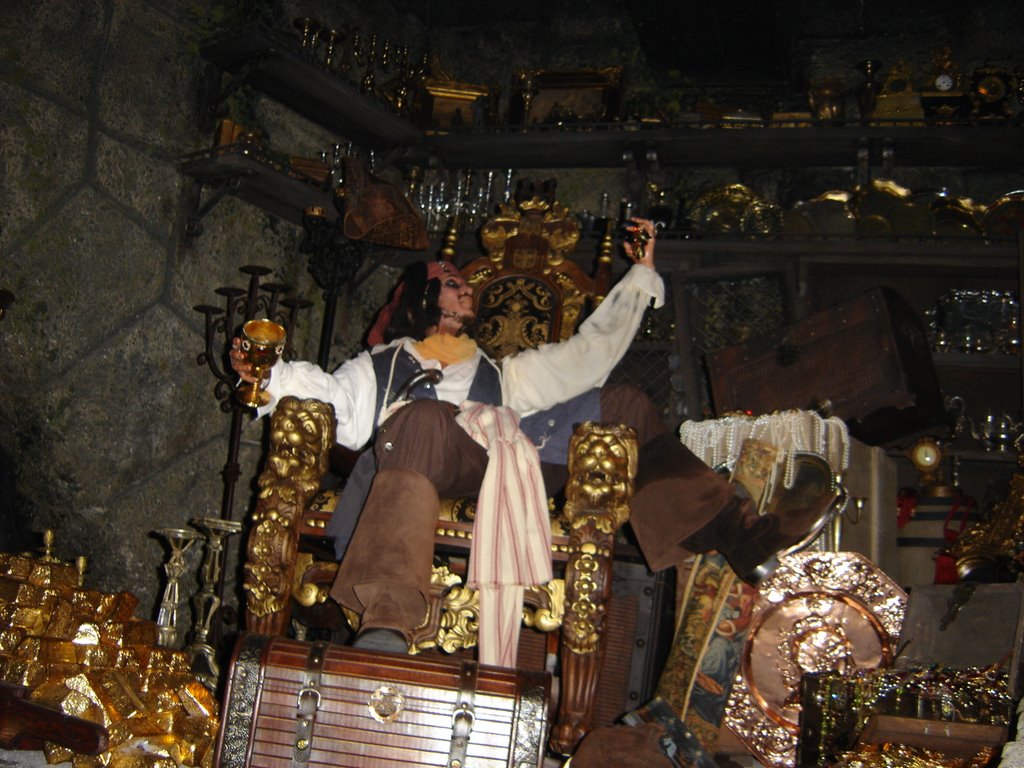
We don’t go every year; but this time was a must because we hadn’t yet seen the renovated Pirates of the Caribbean ride. As the entire world knows by now, the Pirates movies have become one of the biggest of the company’s many franchises. And so, to take advantage of Pirates-mania — timed, not so coincidentally, to correspond with the release of the second Pirates film, “Dead Man’s Chest,” this past summer — Disney decided to “update” the ride on which the movies are based. Not only do animatronic versions of the movies’ characters now appear in the ride, but everything has been freshened up.

Over the past forty years, I’ve probably ridden Pirates of the Caribbean some thirty times, so the thrill had pretty well gone for both Tim and me. This time was definitely different, however. Fifteen minutes after the park opened, we were anxiously on our way to the Caribbean.

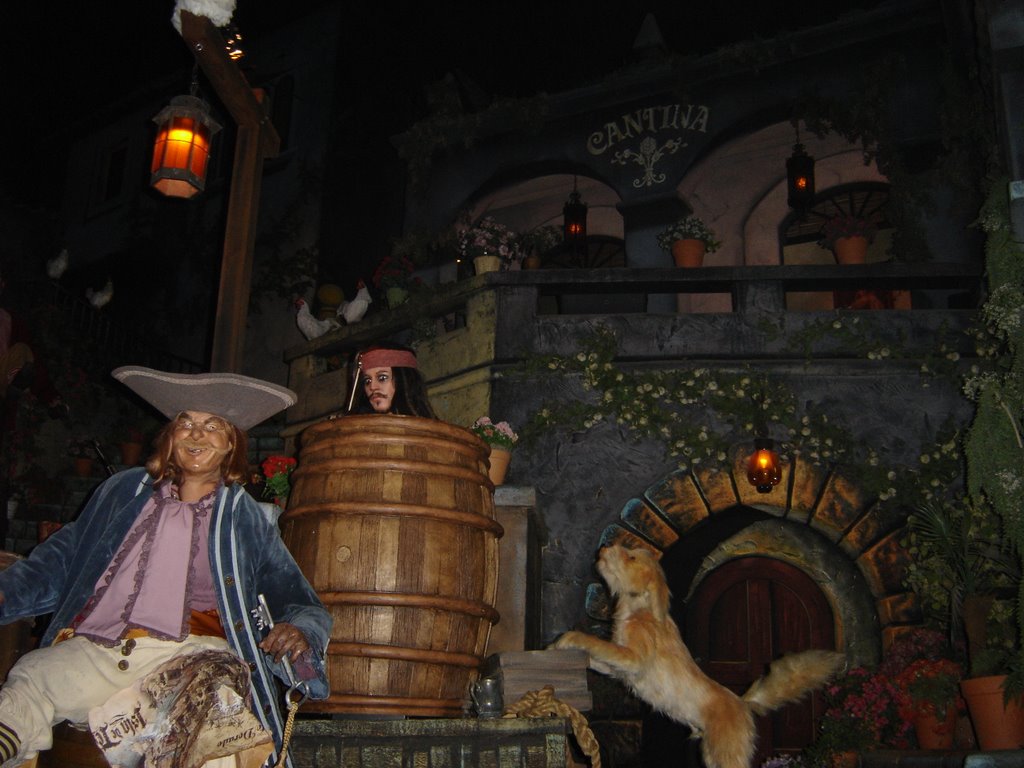
The ride’s storyline is still very much the same, except now the enemy ship is led by Captain Barbosa (a very good likeness of Geoffrey Rush), who is searching for his nemesis Captain Jack Sparrow (Johnny Depp). (Beware: spoilers ahead!) Captain Jack, who looks exactly like his real-life counterpart, can be seen hiding amongst some mannequins and then again inside a barrel, and finally surrounded by riches, singing “Yo-ho, yo-ho, a pirate’s life for me!” The newly restored treasures sparkle and the villagers and their captors all look freshly scrubbed. There is also a wonderful water curtain, where a projection of the squid-headed Davy Jones warns all riders to turn back. I was so distracted taking pictures the first time around, I made Tim go on it with me again so I could savor every new feature. If it wasn’t so darn late when we got home, I probably would have watched both movies, too, just to relive it all again.

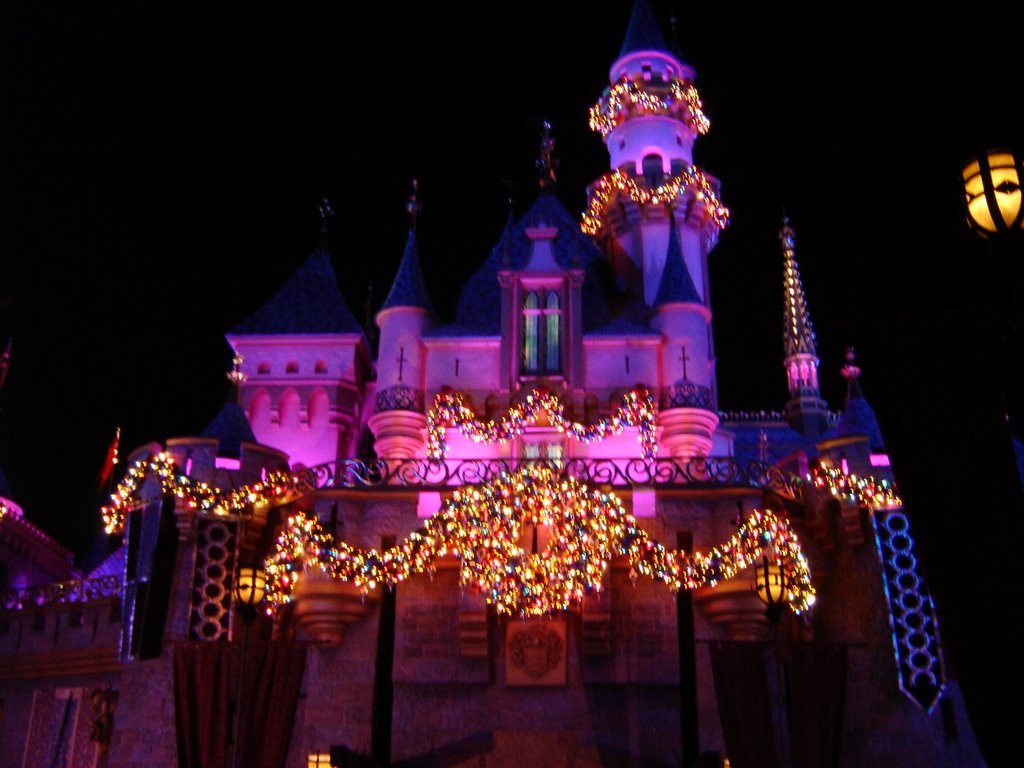
As for the rest of Disneyland, it looked beautiful as always. It’s a Small World was festooned in Christmas lights and Sleeping Beauty’s castle was glorious. Although I thought we’d only want to go on the Pirates ride, we also (of course!) rode my other favorites: the Haunted House, decorated once again as “The Nightmare Before Christmas,” the mad teacups, Peter Pan, and Buzz Lightyear’s Astro Blasters, a combination ride and video arcade. Before we knew it, it was 11PM — way past our bedtime! — and so we caught the tram back to reality . . . but not before picking up our limited-edition, employees-only holiday ornament. Another Disney memento to add to our already memory-laden Christmas tree.

12/10/06

Saturday, November 25, 2006

Black Friday

Long gone are the days when I’d casually drop major bucks at the November Nordstrom sale. In fact, my reign as a super-shopper ended when I stopped working with the public. No longer compelled to wow others with a new outfit everyday, I now buy clothes primarily through catalogs and during occasional forays into Ann Taylor Loft.

The urge to shop the day after Thanksgiving remains primally strong, however, and so it was no surprise that I found myself casually suggesting to Tim—like a junkie falling back into a bad habit!—that it “might be fun” to go to the Camarillo outlet stores the day after Thanksgiving. Not understanding the need to shop just for the sake of shopping, Tim asked what I was going to buy. "Uh, underwear," I said—a concept he could understand. His interest was further piqued when we saw shoppers (mostly women) already lined up outside the Camarillo stores on the 11PM news. Although most malls weren’t opening until 5AM the next day, the outlets opened at midnight Thanksgiving night. Tim was now completely on board.

Still, it was a shock when he whispered in my ear Friday morning that it was time to head to Camarillo. Realizing it was still dark, I mumbled, “What time is it?” “5:30AM,” he answered wide awake. “Ugh! Let’s sleep a little longer,” I insisted. But the urge overpowered me as I sent Tim out for sustenance. Armed with coffee (him) and a blueberry muffin (me), we left the house at 6:30AM and headed 35 miles north to Ventura county. I didn’t even blink when we passed a bank thermometer claiming that it was only 40 degrees outside.

Dubbed “Black Friday” by the media, the day after Thanksgiving is—along with the days directly before and after Christmas—one of the busiest shopping days of the year. No wonder then that the parking lot was already full by the time we arrived in Camarillo. Following all the other latecomers to a lot across the street, we parked behind the Edwards moviehouse, completely ignoring a huge sign that screamed “THEATER PARKING ONLY!!” We then waded back to the outlets and made a beeline straight to Ann Taylor Loft, my favorite of all the stores. Tim read the newspaper outside (along with all the other husbands) while I went in to shop.

Over the years I’ve developed several shopping rules that are especially imperative on a hectic day like Black Friday. Rule #1: what you wear to shop is almost as important as how much money you have to spend. Always wear pants with an elastic waistband (for easy off and on) and comfortable slip-on shoes. Rule #2: if you find a pair of pants or a skirt that fits, buy it in every color available as you never know when you’ll find another well-fitting pair of pants (or skirt) again. And Rule #3: unless it’s something you absolutely must have, never stand on a long cashier line for just one item. Life is too short; plus you don’t want to alienate any husbands or friends you may have conned into shopping with you.

Back in my svelte days when I was a size 8, I used to find everything I wanted on the rack. But now that I’m the same size as every other healthy woman in her 50s, things sell out more quickly. The pickin’s were disappointingly slim this time for women of a certain size. Both Ann Taylor and Jones of New York, my other Camarillo favorite, were a bust.

Tim and I had fun anyway, watching other shoppers and steering clear of several stores that had long lines to even get in. Channel 7 news was there in full force (three news vans!), but we managed to steer clear of them, too. To escape the crowds, we ducked into various food shops, like Le Gourmet Chef and Harry & David’s, and snacked on their samples (hence the need for a larger dress size!). Our haul for the day included peppermint bark (to give as Christmas gifts), key lime pie mix, maple sugar (yum!), a silk shirt from Chico’s, and, of course, several boxes of Jockey underwear.

After three hours I asked Tim if he wanted to go over to the Edwards and catch a movie. He opted to go home instead. We were back in bed by 11:30AM.

11/25/06

Thursday, November 09, 2006

Working the Polls

I worked my first polls in 2004. It was a presidential election year and several of my former students had volunteered to work. I figured that if they could do it, then why not me and so contacted the county registrar for an appointment. I was asked to be a clerk at a polling site located in a small building at the back of a nearby Volvo dealer’s lot. The polls were supposed to open at 7AM, but the lot manager didn’t show up with the key until 7:15AM. I lobbied for setting up the booths in the parking lot, but the site inspector (i.e., supervisor) refused even though some of the 20+ people, who had shown up early, started leaving for work. Eventually we were able to open—and, indeed, had a wonderful day participating in the democratic process—but I swore that if I ever did this again, I’d be the inspector so no one would go away unhappy.

Well, be careful what you wish for! Sure enough, last March I got a call asking if I’d like to supervise a polling site during the June primaries. Remembering how rewarding it was to help facilitate the election process in 2004, I said yes and quickly proceeded to recruit three students to work the polls with me. Unfortunately, our site was located inside a decrepit convalescent hospital that smelled of urine and housed several moaning and screaming patients. Still, despite these distractions, we got the job done and felt good afterward. So much so, in fact, that I gladly agreed to supervise another site during this week’s gubernatorial election.

So, what do pollworkers do? Once you agree to serve, you’re invited to attend a 2-3 hour orientation. There you watch three videos (how to setup, how to close, and what to do in-between) and ask all manner of questions. Much of the work is just common sense; but there are certain protocols that must be followed and there’s a ton of detailed paperwork to complete once the ballots have all been cast. The best thing to do is recruit competent clerks who can each handle a small part of the process (e.g., check-in; mark rosters; collect ballots; etc.). The inspector then manages the clerks and troubleshoots any problems. I also make a point of insisting that everyone who walks in the door gets to vote, even if s/he lives in a precinct thirty miles away.

Ten days before the election, the inspector picks up the voting equipment at a designated place in Culver City (e.g., Fox Hills mall). With a major election like the governor’s race, it’s expected that many people will want to vote and so we were given five regular booths, one lower (more sturdy) booth for disabled voters and (something new!) a “talking booth” for visually-impaired and non-English language-speaking voters. In addition, this was the first election to use the new Inkavote ballot-scanner—a small photocopier-sized machine that reads each ballot to make sure the voter hasn’t double-voted, etc. This sits atop the ballot box, which is a little larger than those Rubbermaid boxes designed to store Christmas ornaments or other less precious items.

I guess enough people complained about the convalescent hospital, because this time we were assigned to a polling site in the waiting room of a tire store (!) The manager couldn’t guarantee that anyone would be available to open the store at 6AM, so I threatened to setup on the sidewalk if necessary. For two nights, I tossed and turned with nightmares about having to open the polls late. I even convinced Tim to go with me in case we had to setup everything outside. Come election day, however, the store owner himself was there by 6AM (phew!). The polls opened right on time at 7AM. By 8:30AM, fifty people had already voted. It looked to be a busy day.

Only two of my students were available to work again; but happily two other pollworkers—a mother and her 18-year-old son Nick—unexpectedly joined us at 6AM. Between the five of us, we were able to handle all duties quite smoothly and even had time to take long breaks during slow times. Poll watchers stopped by periodically to see how things were going. A staffer from the Secretary of State’s office also dropped in and asked me some questions. Taking notes on a clipboard, she congratulated us on doing a great job and then gave us all red-white-and-blue lapel pins. At 7PM our young pollworker Nick cast his first ballot. We all cheered.

Despite some celebratory moments, it’s always a long day working the polls. By 8PM we were thoroughly exhausted and reeked of rubber. Once we declared the polls officially closed, Tim returned to help us tear everything down and count the ballots. Two hundred and thirty-nine people had voted—over 30% of our precinct. Not a bad day’s work.

Still, it’s a wonder to me that the process even works. For little more than minimum wage, the county registrar is able to recruit thousands of volunteers to staff the polls for thirteen long hours every election. That the ballots even get delivered safely back to the registrar seems a miracle.

Driving back to the Fox Hills mall late that night to deliver the ballots and equipment, I turned on the radio just in time to hear that the Democrats had reclaimed the House of Representatives. Bursting into tears, I realized that the process does indeed work and that sometimes even the longest days have a happy ending.

11/9/06

Tuesday, October 24, 2006

Autumn in Manhattan


Of all the places we’ve traveled, New York City is always the most emotionally difficult to leave. Long after we’ve returned home, I imagine myself strolling through the concrete canyons of the east side or rushing along Times Square. Our small postwar house seems so quiet in comparison.

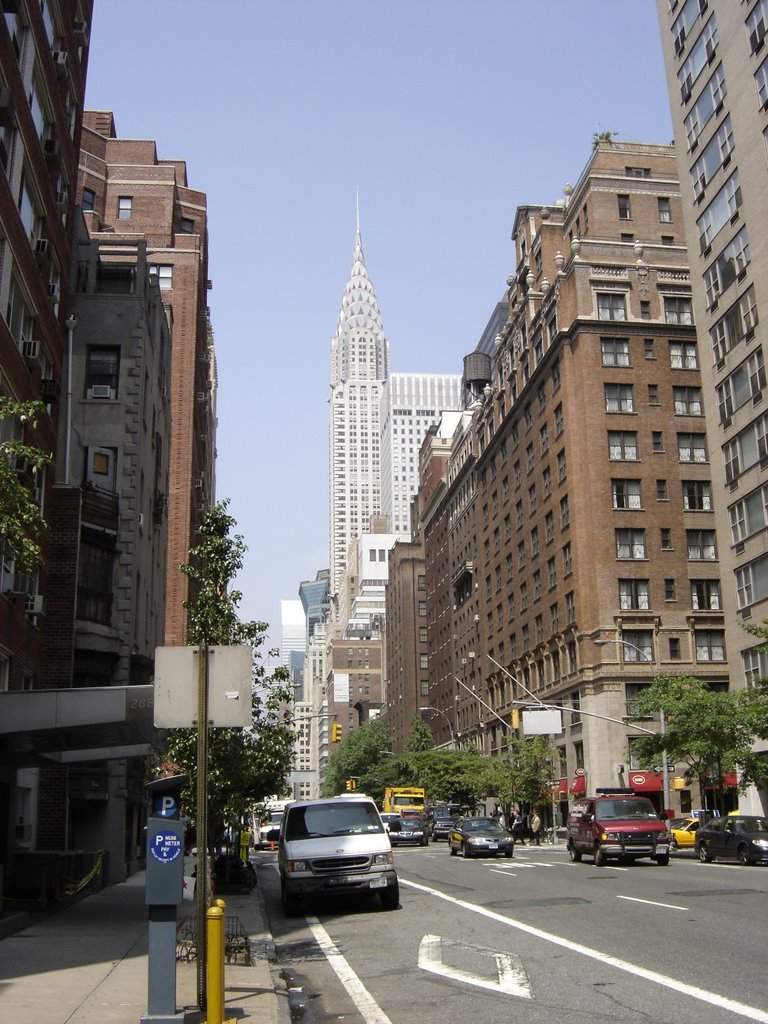
Like usual, last week’s trip to NYC was business-related. I had a conference Thursday night and Friday, so Tim and I flew in on Wednesday. Trying to save money, we took the A-train into town and got thoroughly confused when the A suddenly turned into an F-train in mid-transit due, according to a barely audible voice from above, to a “police investigation.” After riding around from one unrecognizable stop to the next, we finally found our way to Grand Central Terminal, where we happily emerged and walked four blocks to the Shelburne Hotel in Murray Hill (the brownstone building above on the right, with the Chrysler Building peeking over its shoulder). This was the third time in less than two years I had stayed at the Shelburne, so it felt like I was coming home.

Surprisingly, I was able to convince Tim to accompany me to “The Today Show” when we both woke up ridiculously early the next morning. Rarely great journalism, “The Today Show” nonetheless keeps me tuned into American culture as well as the day’s major headlines. Plus I like the people: hosts Matt Lauer and Meredith Viera, who replaced Katie Couric, weatherguy Al Roker, and newsgal Ann Curry. The network calls them “NBC’s First Family” and they genuinely seem to like each other.

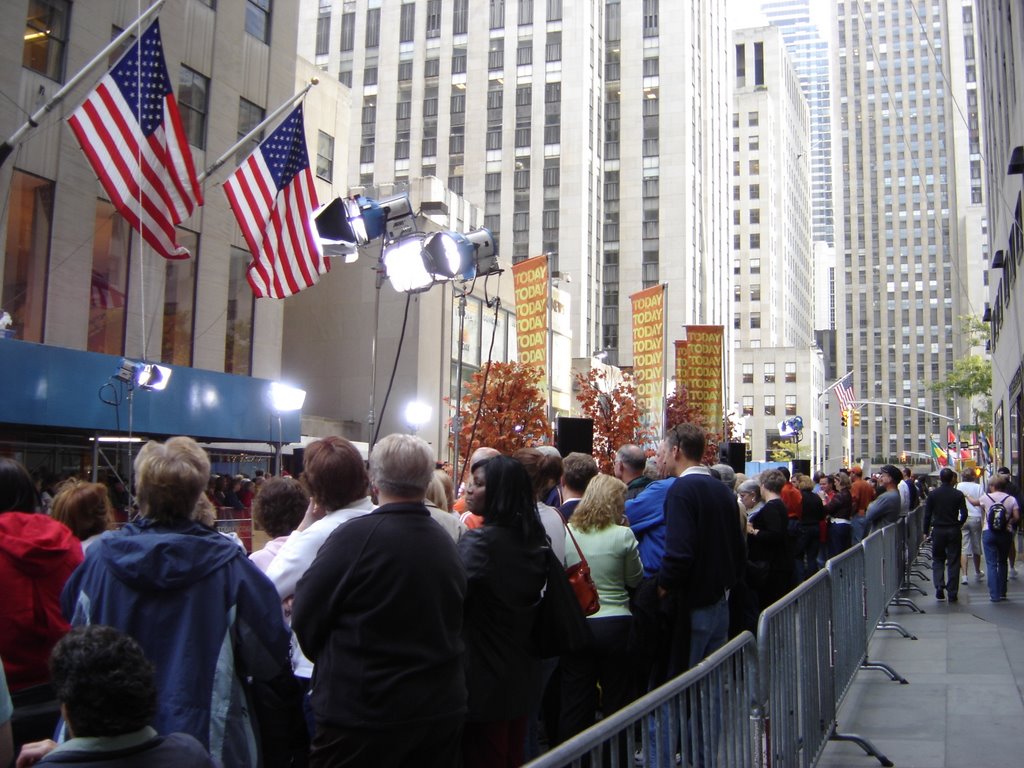
Much of “The Today Show” is filmed outside (weather permitting), with the hosts actually mingling among the fans at the half-hours. It was 7:40AM when we left the hotel. I knew we’d probably miss the 8AM segment, but was hopeful we’d be on the air at 8:30AM. The morning was glorious: hazy but warm. Thank goodness I had packed a denim skirt and flip-flops!


Racing through midtown Manhattan by foot during rush-hour was exhilarating—I felt like I was visiting the city for the first time. We arrived at Rockefeller Center by 8:05AM and quickly went in search of the show. Tucked behind the news studios was a crowd of people, corralled by banners, lights and a removable fence. We squeezed our way toward the studio door and waited for the hosts to appear. A fake backdrop of the Brooklyn Bridge shielded the area from passersby. Illinois Senator Barack Obama was being interviewed on several television screens affixed to the outside of the building. I saw Meredith, in a bright blue sweater, walk into the hall as soon as the interview ended. They were heading our way!


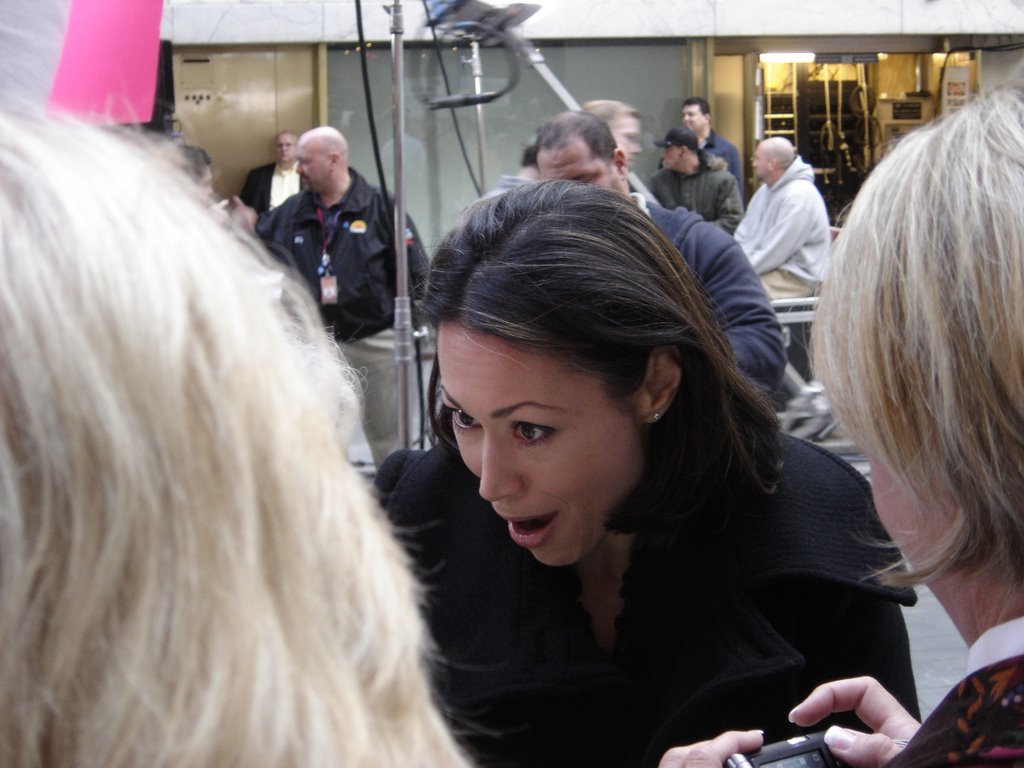
Ann Curry was the first to emerge. She made a beeline straight at us and then stopped to talk to an older woman celebrating her birthday. Meredith, Matt and Al straggled behind, waving to the crowd and talking among themselves. At one point, I remember Tim yelling, “Here comes the camera!,” so I looked up in a daze and waved. But mostly I was mesmerized by Ann Curry, who is stunningly beautiful and extremely gracious. Meredith, too, is much prettier in person than on TV and seemed to really enjoy chatting with the fans. Both she and Ann stayed and worked the crowd well after the segment. Matt, who looks older in person, had an in-studio interview and so quickly went back inside. Al just looked and acted like Al. I was absolutely thrilled to see my morning heroes.

For lunch, we took the subway down to Little Italy, where we ate our favorite coal-flamed pizza at Lombardi’s. Opened in 1905, Lombardi’s claims to be NYC’s first pizzeria. It certainly epitomizes all the standard clichés: checkered tablecloths, autographed photos of Martin Scorsese on the wall, and Frank Sinatra singing overhead. But the pizza is anything but standard: cracker-thin crust with just the right amount of sauce and Mozzarella. Yum! From there, we went back north to Broadway, where we bought tickets for two plays: “Fame Becomes Me,” the one-person show starring comedian Martin Short, and “Butley” with Nathan Lane.

Walking home through Times Square, Tim suddenly said, “Look, there’s the Naked Cowboy.”

“What do you mean, ‘Look, there’s the Naked Cowboy’?” I asked.

“See that guy over there,” he said, pointing toward the middle of Times Square. “He calls himself the Naked Cowboy. He’s famous.”


And sure enough, standing there was this tall, muscle-bound blonde, wearing nothing but a cowboy hat, boots, and a pair of white briefs with NAKED COWBOY stenciled on his behind. He was playing the guitar and posing for pictures as if it was the most natural thing in the world to stand around Times Square in one’s underwear. No wonder I love this city!

It was drizzling the next morning, so I donned my rain boots and ugly, but extremely practical, Kelty slicker before heading ten blocks north to the conference. It has rained or, worse yet, snowed every time I’ve been to NYC, so I came prepared! Tim spent his day wandering around Gramercy Park, where he lived for three weeks in 1985 while working on a job. The Gramercy Park Hotel, where we used to stay when it was the funky, rundown home to aging rock stars and hipsters, has since been renovated into multi-million-dollar condos, so Tim didn’t dare enter. Instead, he took the subway north and visited the Sony Wonder Technology Lab, where he got to see historic radio and television equipment—right up his alley.


We returned to Broadway that night and laughed hysterically at Martin Short. The rain had stopped, so we walked back to the hotel. Times Square was ablaze in neon and tourists were out in full force, despite a chilly wind. Autumn had descended overnight.

I love Manhattan on the weekends—everything is much less frenetic. We had arranged to meet a former student, Stuart, at 11AM for brunch on the west side and so lounged around our apartment-sized hotel room (separate living room, bedroom, bathroom, and kitchen!) until it was time to leave.

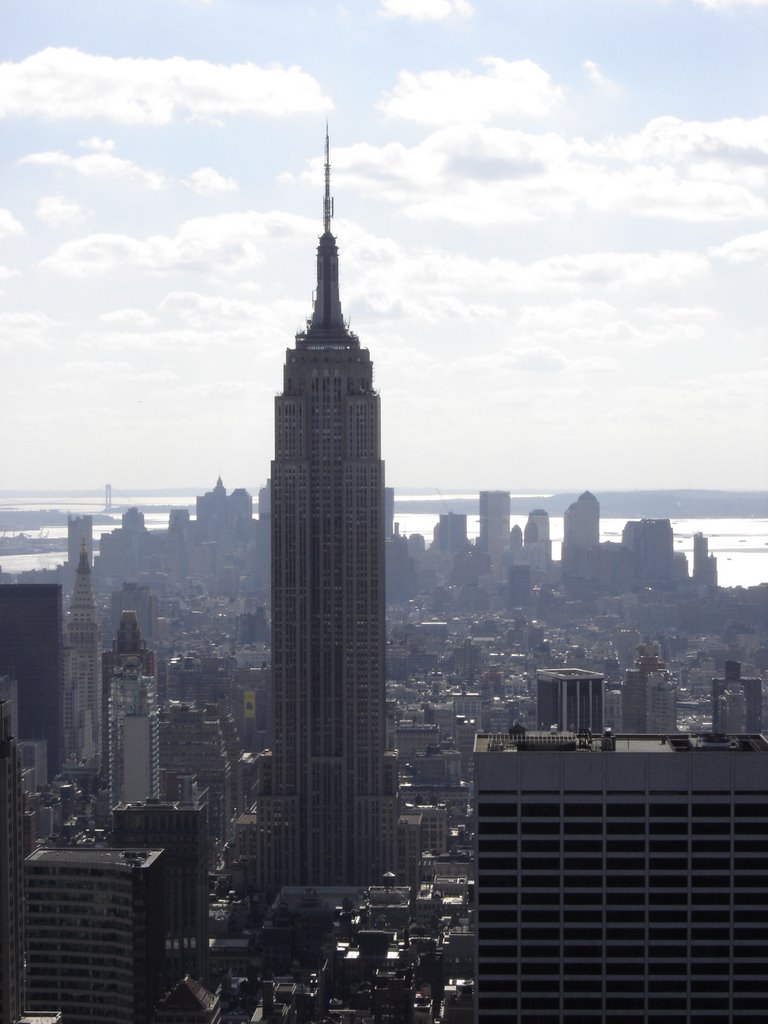
After a tasty brunch at the charming “44 1/2” on Tenth Avenue, we returned to Rockefeller Center where, at Stuart’s urging, we bought tickets to tour the observation deck at the “Top of the Rock.” The view from seventy floors up was phenomenal, even for someone like me who fears heights. I may not be religious in any traditional sense of the word, but looking down from such a high perch, one has to believe that there is an ultimate order to the world. I was very moved.


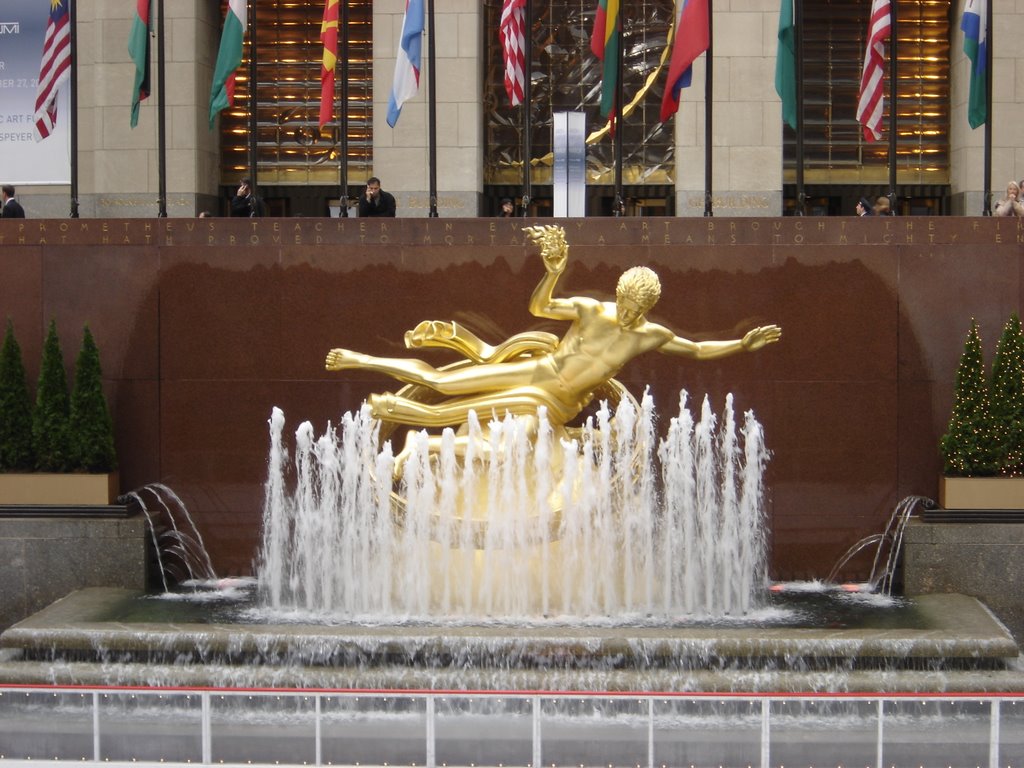
Back on the ground, we basked in all the activity surrounding Rockefeller Center. Skaters were enjoying the ice rink, which is installed every year in front of the signature gold statue of Prometheus. I caught a whiff of the holidays in the air and so bought NYC-themed Christmas cards and an ornament. Then I made Tim promise that we would return one December so we could spend the holidays in our second most favorite city. I quietly wished we didn’t have to fly back home the next morning . . .


10/23/06

Friday, October 13, 2006

YES on 87


I got one of those funky automated phone calls yesterday, saying that Bill Clinton was going to speak today at UCLA in favor of Proposition 87, the Alternative Energy Amendment. Now I’m a big fan of alternative energy, but I’m an even bigger fan of Bill Clinton, so I listened up. The rally was scheduled for 9:15AM. Attendees would be admitted by ticket, which were available through the “Yes on 87” website. The deal was sealed for me when a student emailed, saying that the rally was being held in UCLA’s Sculpture Garden, just east of the building where I teach.

I had already seen Bill Clinton twice: (1) two years ago when Karen and I bought balcony tickets to see him speak at the Dorothy Chandler Pavilion and (2) a year before that, when I waited on line for twelve hours to have him sign his autobiography. He shook everyone’s hand at the book-signing, even though he’d been standing there himself for four hours. It’s a moment I will never, ever forget, and so it didn’t take me long to decide to attend the Prop. 87 rally. I registered online (some sort of security check?) and printed out my ticket. I was ready to go.

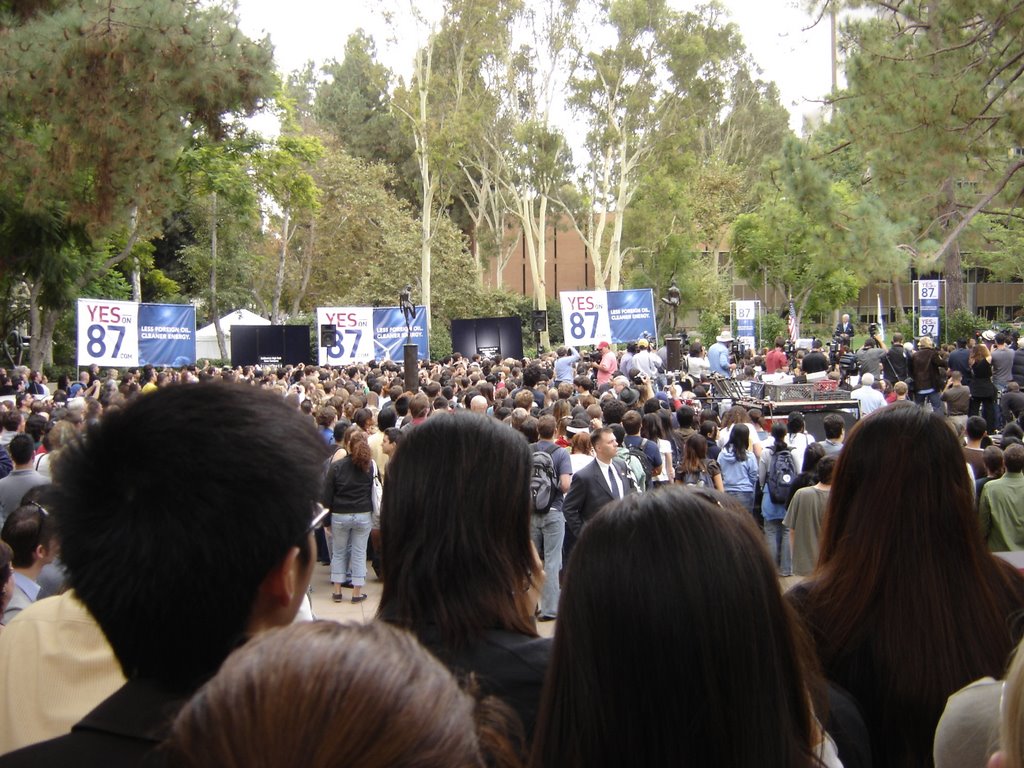
In the spirit of Prop. 87, I decided to take the bus and so got up extra early to get there on time. By some miracle, the bus arrived just as I crossed the street, a sign that good things were to come. The ride, which would have taken 30 minutes by car, took 50 minutes by bus. I got to UCLA at 9AM and hightailed it up to the Sculpture Garden, located on the other side of campus. En route, I started to notice all these students heading my way and so speeded up my pace. Sure enough, they were all going to see president Clinton, which became apparent as soon as I reached the Garden. There, among the sculptures, were “Yes on 87” signs and a clutch of cameras pointed at a small dais and microphone. On the walkway above were hundreds of students jockeying to get a good view. No one was taking tickets, though I heard several people say that there was a queue forming on the east side of the Garden.

I tried to see the dais from several places along the walkway and finally settled on a spot next to a big tree. There was a large man standing in front of me, but when everyone in front of him stopped moving, I had a clear shot of the microphone. It was now 9:15AM. I took out a book and started to read.

The crowd, which someone estimated at roughly three thousand people, was made up primarily of young (probably undergraduate) students. I saw no more than four or five professor-types. I was definitely one of the oldest people there. At 9:30AM, someone started playing music—soul and rhythm & blues—over the loud speakers, much to the dismay of most of the kids standing nearby. “This music is soooo inappropriate,” one of them complained as I silently chuckled to myself.

At 9:45AM, people started to wander into the closed-off area in front of the dais. Apparently these were the ticketholders who had waited on line. Clinton later mentioned that some had queued up overnight.

I started getting grumpy at 10AM. I’ve never been to a political rally that started on time, but this was getting ridiculous. Then I overheard someone talking on a cellphone, saying that Clinton wasn’t speaking until 10:30AM. Obviously, I hadn’t gotten that memo. Ten minutes later, a man in a “Yes on 87” t-shirt announced that the president was only three minutes away (the crowd: “Hooray!”) and that he would be speaking in another fifteen minutes (the crowd: “Boooo!”). A group of young engineers to my right started to cheer: “U-C-L-A!! UCLA!!! Fight, fight, fight!” Followed by: “BILL!! CLINTON!!! BILL!! CLINTON!!! [clap, clap, clap],” which successfully lifted the mood. I stopped reading. Five minutes later, we heard cheers and applause from our left. Clinton’s motorcade had arrived.

Two short women moved in behind me, happy to be there even though they couldn’t see a thing. One of them was confused over why the guy at the microphone kept calling Clinton “president” instead of “former president.” “Well, I wish he still was president,” her friend said, renewing my faith in young voters. Then suddenly, city council president Eric Garcetti was being introduced and the real rally began. Garcetti addressed the crowd in English and in Spanish (!) and then introduced the next speaker. “She’s not the president, but she did play one on TV. Miss Geena Davis!” (applause, applause, applause). The two young women didn’t know who she was, so I had to explain. Davis then introduced Bill Clinton, who got a rousing ovation. “I can see him!” one of the women shouted. “Me, too!” her friend said. When I asked if I could poke my head over, they said yes and so I did very quickly. They laughed when I blew Bill a kiss and then we all settled down to listen as people quietly snapped pictures with their cellphones. (Clinton is the tiny figure standing between the flags in the photo above).

I don’t remember now what he said, but I agreed with all of it. He got huge cheers when he talked about saving the environment and when he mentioned Hillary and “Al Gore’s movie.” Although he never talked about Bush directly, he did chide those who waste money on war instead of fighting against global warming. The students listened attentively, even though it seemed to me like Clinton was more interested in addressing the media than he was the kids. He ended by urging us all to spread the good word about Proposition 87 and then waved good-bye.

It was 11AM. Most of the students headed off to class, while I rushed to catch the bus. Less than a month to go until the election...

10/13/06

Tuesday, October 03, 2006

Famous Homes of LA


As you know by now, Tim and I love Los Angeles and one of the things we love most about the city is its architecture. Few things in this world can compare to the architectural magnificence of Bullocks Wilshire or the simple beauty of the Eames house overlooking Pacific Palisades. This past weekend we were thrilled to be able to tour some the most famous houses in Los Angeles.

On Saturday, we participated in the Silver Lake Modernism tour of mid-twentieth century homes designed and built by some of the most prominent architects of the period. First up were the Bubeshko apartments, designed by Rudolph Schindler, one of the most influential local architects, possibly second in importance only to Frank Lloyd Wright, his mentor. Constructed in the late 1930s, the multifamily dwellings are set back against a hillside and make liberal use of plywood. I was ready to sell our house and move into the topmost apartment until I learned the monthly rent was $3500!

We also saw outstanding homes designed by Richard Neutra, Rodney Walker and Gregory Ain. But my favorite was the Meyers house, built in 1938 by Raphael Soriano, who specialized in the use of prefabricated materials and built-in furniture. Unlike most of the other homes we visited, this one had no view of the Silver Lake reservoir; but it did have an amazing kitchen (pictured here) outfitted in metal avocado-green cabinets. Awarded as a prize on the 1950s TV show “The Price is Right,” the self-contained sink-and-stove unit included an all-in-one washer-dryer, which was the talk of the tour. Thank goodness we just remodeled our own kitchen last year otherwise I might have felt compelled to change to an all-avocado motif.

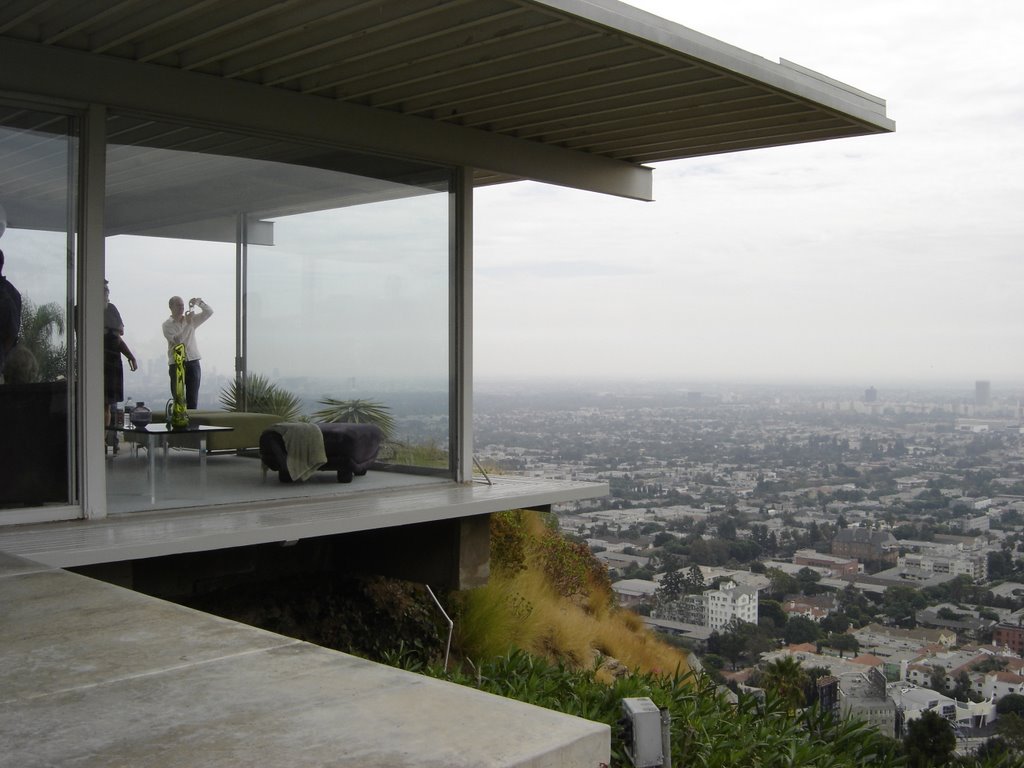
After a good night’s rest, we were ready to tackle a second architectural tour—this one sponsored by the MAK Center for Art and Architecture located at Rudolph Schindler’s former residence. The centerpiece of the tour promised to be Case Study House #22, arguably the most famous house in Los Angeles. Designed by Pierre Koenig, the house was built in 1959 as part of the “case study” series of Southern California prototypes featured in “Arts and Architecture” magazine throughout the 1940s and ‘50s. House #22 became an icon when Julius Shulman famously photographed it, in 1960, jutting out over a nighttime Los Angeles skyline. No picture since has captured so well the supposed modern lifestyle of mid-twentieth century LA.

The first site we visited was the Harpel house, built in 1956 by John Lautner. Located atop a long 45-degree-angled driveway, the house is currently undergoing renovation, but still offers a fantastic view of the San Fernando Valley and especially Universal Studios. Tim took one look and whispered, “This tour is already much better than yesterday’s!”—proving that you can take the boy out of the Valley, but you can never take the Valley out of the boy. The view WAS stunning, but I was far more impressed by the Chemosphere, which we could see through the trees flying above the Harpel House. The Chemosphere (see above), also designed by Lautner, is another famous LA house that sits atop a long pole, looking very much like a wooden flying saucer. Although we couldn’t go inside, it was very exciting to see yet another Los Angeles icon up close and personal.


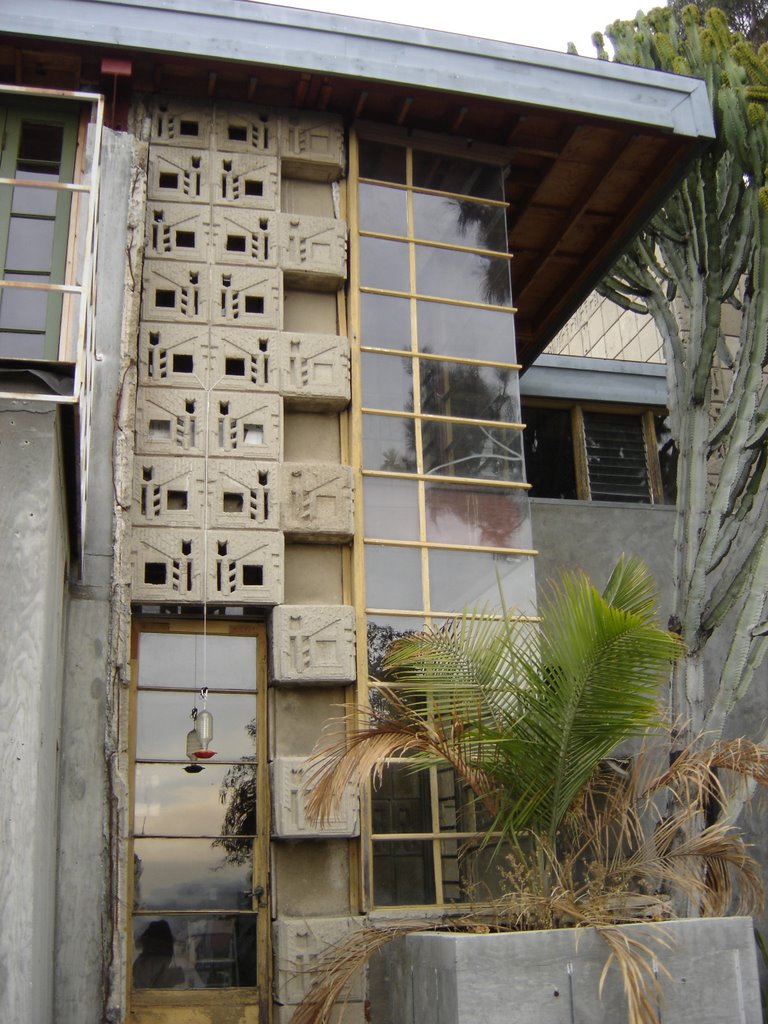
From the Harpel house, we snaked down a very skinny road to the Kallis house, which was built by Schindler in 1946, and then down to Hollywood, where we were next scheduled to see Frank Lloyd Wright’s Freeman house. Faced with another steep and skinny road, I insisted on parking at the Hollywood and Highland mall three blocks away. “This house better be worth it,” Tim mumbled under his breath as we started to walk up yet another 45-degree-angled driveway. And indeed it was, for there—quite suddenly!—was one of Wright’s fabulous “textile houses,” made of precast concrete blocks decorated with Mayan-Islamic patterns. Although the house is no longer habitable—in fact, we had to sign an insurance release before we were allowed inside—it is nonetheless captivating with its imposing concrete walls and wonderful views of Hollywood. Everyone was extremely grateful that the University of Southern California bought the building in hopes of restoring it, some day, to its glorious splendor.


Anxious to get to the case study house, we quickly toured a nearby residence designed by Irving Gill in 1917 and then headed back to the Hollywood Hills. More windy roads (luckily we were driving the Miata) and one last 45-degree angled driveway and we were finally there. The outside is quite unassuming: a corrugated steel carport. We then walked through an archway and—yikes!—there was the entire city of Los Angeles at our feet! The panorama, from the Griffith Park Observatory to the ocean, was quite simply phenomenal. And to top it off, there was the famous living room window happily dangling over it all. Everyone just stood there in rapt amazement.

As beautiful as it all was, though, I was still happy to get back to the flatlands to our small 1947 traditional home. Perhaps someday someone will offer a tour of postwar houses in Culver City and our house will become a celebrity, too. Hmmm...time to hire a landscaper...

10/2/06

Tuesday, September 26, 2006

Albuquerque, NM


Like most of our out-of-state travel, last week’s trip to New Mexico was work-related. I was asked to attend a library e-learning (i.e., online teaching) conference in Albuquerque. Tim decided to go, too, since he’d never been to New Mexico. We arrived on Wednesday afternoon and returned home on Sunday.

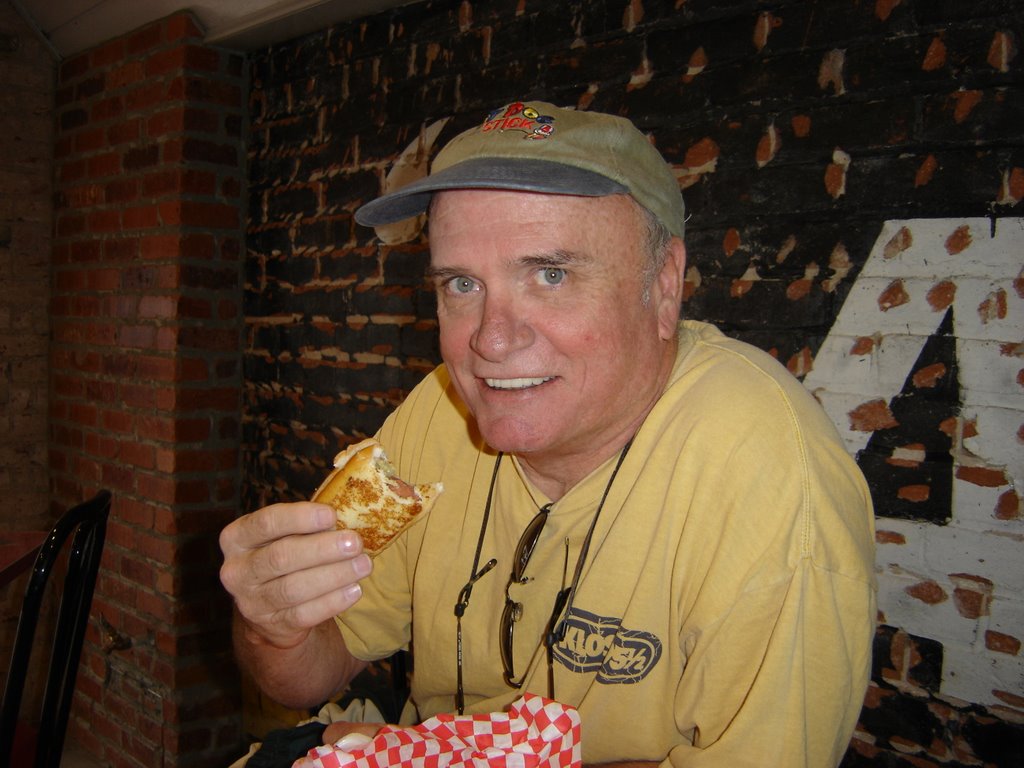
The conference was held at the Hyatt Regency in downtown Albuquerque, so that’s where we stayed. Based on our experience in other cities—like Portland, Chicago, NYC, San Francisco, and even Sacramento—we opted not to rent a car, thinking there would be plenty for Tim to do within walking distance of the hotel. Boy, were we wrong! Not only was there nothing to do, but the only other people out on the street were conference-goers (librarians usually walking in pairs) and the homeless. Poor Tim was, therefore, pretty much stuck in the room while I was downstairs learning about electronic teaching. I did manage to break away for lunch on Friday and join him at Drew’s Dang Good Dogs, a new hot dog stand that was having its grand opening that very day. Apparently I was the only person in Albuquerque who doesn’t eat hot dogs because Tim waited an hour before placing his order. Was it worth the wait? I think the picture says it all!


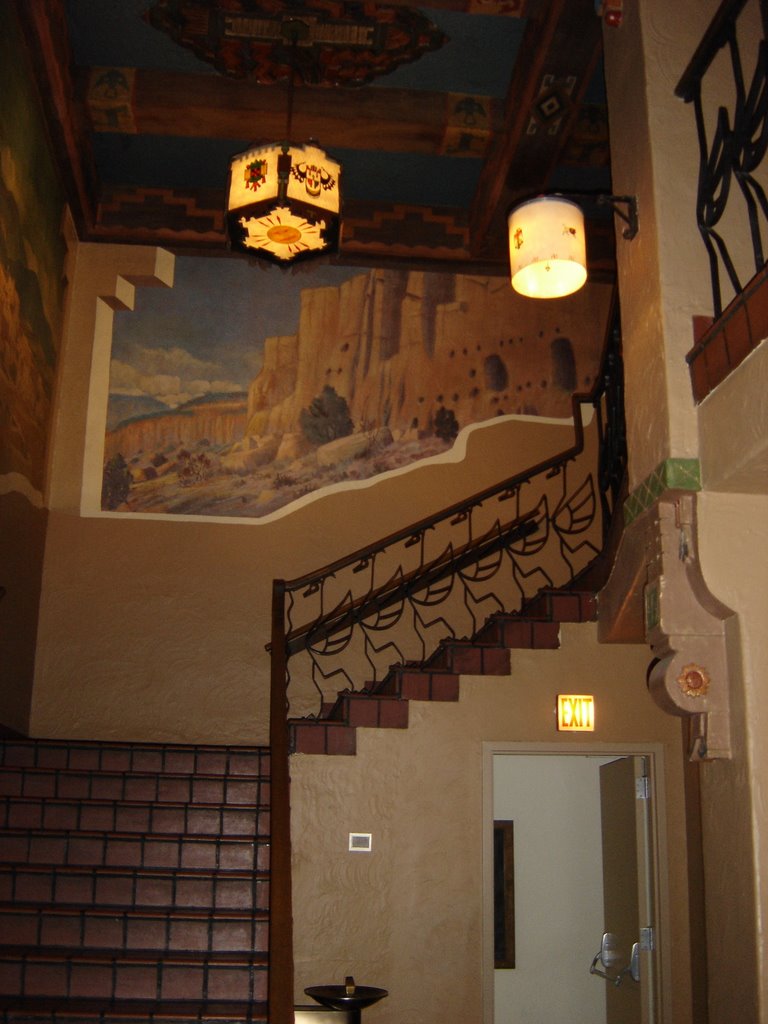
On the way back to the hotel, we noticed that the Kimo Theater was open. Recently renovated, the Kimo is a 1927 movie house and old vaudeville stage built in a fabulous “pueblo deco” architectural style. Happily, the public can visit for free on days when there are no rehearsals in progress, so we decided to take advantage even if it meant getting back to the conference a little late. The lobby was amazing—walls and stairways festooned in southwest murals and Native American artifacts. Every detail was just perfect. I could easily imagine how wonderful it must have been watching a movie or live stage show at the Kimo after driving for miles on old Route 66. This was truly the highlight of our trip.


The first thing we did when we arrived in town was walk over to the main library to check our email. Although free at most libraries we’ve visited, Albuquerque charges three dollars for a “smartcard,” which enables the user to log onto the Internet and other online software in perpetuity—or at least until the technology changes! Like all the other displaced people in town, we spent a lot of time in the library checking email and various favorite websites. So it was no surprise that we found ourselves outside the library, Saturday morning, waiting to get in and use the computers. There I talked to a nice homeless man, who told us how to get to Old Town by bus and which bathrooms to use when we got there (!) He also advised us to get transfer tickets when we first boarded the bus because they allow riders to travel anywhere for free for up to two hours. (We did and he was right!) I also met a friendly woman who claimed to have a lawsuit pending in Los Angeles, where her husband fell down some stairs in front of McCormick & Schmick’s. I wished her luck as I slipped into the library.

After checking email one last time, we hopped the #66 bus to Old Town, the area’s earliest known Hispanic settlement (ca. 1700s). Today, of course, it is a huge tourist destination, where one can buy everything from mass-market sand sculptures to finely crafted jewelry and artwork. I had read about a fresh bakery that sounded particularly intriguing, and so spent an hour-and-a-half following my nose until we finally found the place. By then, most of the pastries were gone, but I did buy some homemade Mexican wedding cakes, which we are still savoring.

At Old Town, we hopped on the bus going east in hopes of finding the New Mexico State Fair. We’ve ridden mass transit in many towns from LA to NYC, but this ride was, by far, the most interesting. Unlike other buses, which seem to serve riders from all economic strata, the #66 provides transportation to mostly homeless and low income people. At one point, a young couple boarded with their newborn baby and my heart just about broke. The mother, who couldn’t have been more than sixteen years old, looked completely exhausted and miserable. She stared into space as the father, a young man possibly in his early twenties, folded up the stroller and got the baby’s things organized. Later, after they left, a pair of drunken women sat behind us and loudly laughed and cursed in three languages: English, Spanish and Native American. The bus took us along Route 66 (now Central NW), through downtown Albuquerque and points east, past the University of New Mexico, Nob Hill, and finally to the fairgrounds. I knew we had arrived because I could see the big ferris wheel in the distance, but the bus driver and riders all had differing opinions on where we should exit. Anxious to be on our way, we got off and headed north.

Well before we got there we could see the fairgrounds’ most famous attraction: the Slingshot, a bungee-cord type of ride that shoots strapped-in couples up over 250 feet in the air. Whether you’re horrified (me) or fascinated (Tim), it’s impossible to look away, so everyone entered the grounds with head craned upward in amazement.

Although only a quarter the size of LA County’s fair, the New Mexico State Fair was pure kitschy fun. We laughed at all the crazy food (deep-fried Oreos and meatloaf on a stick) and strolled by countless vendors selling their wacky wares. I then insisted that we visit the Hispanic Arts pavilion, chockfull of Day of the Dead skeletons and religious icons. Who knew St. Michael could slay his dragon in so many different and colorful ways?!

After walking around for two hours, we headed back over to Route 66, where we caught the bus downtown. Luckily we had just missed a onboard scuffle, which the driver and his passengers gleefully deconstructed throughout the entire ride.

Finally, back at the hotel, we decided to see a movie and so walked three blocks to the new cineplex across the street from the train station. (The concierge warned us not to walk over there at night). The ticket-taker, who used to live in LA, recognized the radio logo on Tim’s t-shirt. “Are those guys still on the air?” he asked incredulously. “Yes,” Tim answered and then told him that he works at the station. The ticket-taker was suitably impressed.

After the movie, we tried to get into the trendy new Brazilian restaurant right next door; but it was too crowded, so we headed down Central instead. Amazingly, there were cars everywhere, looking like a scene out of "American Graffiti"! All cruising stopped at nightfall, however, when the police—who were in full force—put up road blocks to keep traffic off Central. By now I was starving, so we ducked into The Carom Club, a nonsmoking billiards hall with a dress code and small, but upscale, restaurant. The food was good, but was certainly no Ford’s Filling Station. I was more than ready to return home...

9/26/06

Thursday, September 07, 2006

My "Katie Couric" Moment

I was diagnosed with high blood pressure a year ago during an especially stressful period. We had spent the summer remodeling the kitchen; plus I had accepted a new job just four months after starting another job that I was now going to quit. No surprise then that my blood pressure was off the charts when I went to the local Kaiser Medical Center for my annual checkup. The doctor took one look at the figures and quickly accompanied me to a darkened room, where I was given a sedative and directed to lie down. Apparently they expected me to stroke out right then and there. When you’re treated extra nicely at Kaiser then you know something is wrong!

My blood pressure is now under control; but while the doctor had me captive, she scheduled a sigmoidoscopy, which I had managed to escape when I turned fifty. Three months later, I watched in rapt fascination as a tiny camera made its way up my colon. All looked good, except for a small polyp that would have to be removed. The technician put me on the waiting list for a colonoscopy. I decided that if “Today Show” host Katie Couric could undergo a colonoscopy on TV in front of millions of viewers, then I certainly could have one, too.

Kaiser being Kaiser, I didn’t get a call until the following August to schedule the procedure. I selected Tuesday, September 5, a week after summer school ended and three days after our big party. I was then sent a letter, advising me to eat a low-fiber diet the week before the procedure. Also included were prescriptions for the laxatives I was supposed to take the day before. The pharmacist repeated the instructions, emphasizing the importance of refrigerating the liquid laxative. As I was leaving, a woman, who looked strangely like Whoopi Goldberg, grabbed my arm and said, “Honey, when they tell you to chill that stuff, you better get it good and cold, because that stuff is NAAASTY...!”

Since I wasn’t allowed to eat up to 24 hours beforehand, I decided to have a big breakfast on Monday. My last meal: Dinah’s famous apple pancake with cottage fries and bacon. In fact, if I ever find myself on death row, I would definitely order this as my last breakfast as no one makes a better morning meal than Dinah’s!

At noon, I took four laxatives and then shut myself inside the house while Tim went to the movies. Six hours later, I started to drink the liquid, which came with five flavor packs: cherry, lemon, lime, orange, and pineapple. I picked pineapple, which masked the nasty taste well. But it would be difficult to drink three liters of even the most delicious elixir on earth—especially over just three hours!—and so I ended up slugging down only two liters. I’ll save you the gory details on how effective they were...

My appointment was at 9:15 the next morning. Although I was awake for the sigmoidoscopy, I knew I’d be anesthetized during the colonoscopy. Tim, therefore, took the day off from work so he could take me to and from the hospital. We arrived early, as instructed, and then waited while other victims disappeared behind a door. Eventually, my name was called and Tim was told to come back an hour-and-a-half later. I was directed to change into an old hospital gown and put my clothes into a large plastic bag, which was then tucked under my gurney. A nurse named Rick proceeded with preparing the needle for my i.v. Looking at both arms, he tsked and said, “Oh dear, what tiny veins you have!” He then frowned at me like I was a bad girl for not having bulging arteries. After a couple of attempts, another nurse was called in and I was finally prepped. A third nurse, who sat in the corner busily crocheting something yellow, quickly stood up when the doctor walked in. He explained what was going to happen and then asked me to lie on my side. I kept waiting for them to start the anesthetic...when suddenly I was being wheeled out of the room into a long hallway divided by curtains.

“Is it over?” I groggily asked Rick. “Yes, all done,” he answered and then asked if I wanted some fruit juice. I waved him away and fell back to sleep. He returned a few minutes later and said I needed to start waking up. Oddly enough, they allowed me to wear my glasses the entire time, so I could see lots of other colonoscopy patients in various stages of sleep. We looked like stacked-up airplanes waiting to take off at LAX.

Rick fetched my clothes and told me to get dressed. Apparently they were desperate for space and wanted people to leave as soon as possible. He then took me out to a small waiting room, where I sat with Tim until the doctor came. Now I get woozy on aspirins, so you can imagine how I felt. The doctor said we’d have the results of the polyp biopsy within ten days and then said he’d see me again in five years. (“Not if I can help it!” I thought to myself). We then got up to leave.

I could barely make it to the elevator, so Tim went in search of a wheelchair, which he borrowed from somewhere. “Where did you get this chair?” I yelled in my stupor. “SHHHH!” was all he said.

At home, I went immediately to bed, where I passed out fully clothed. I woke-up an hour later madly craving a club sandwich, but settled for toast instead. Two hours later, I was back to normal, answering the slue of emails that had accumulated over the day. After being deprived of roughage for an entire week, I drove over to CPK for my favorite smoked bacon and gorgonzola salad and savored every morsel. My “Katie Couric moment” was now officially over.

9/07/06

Wednesday, September 06, 2006

The Big Party

Our 20th wedding anniversary was August 16. Because we had eloped to Las Vegas, where we got married in a ceremony that was witnessed by only our most immediate family, I thought now might be a good time to renew our vows. But I changed my mind when I realized I’d probably cry through the whole thing, making a fool of myself. Instead, we decided to go in another direction after attending a fabulous dance party hosted by our friends Mary and Roger.

We held our own party this past weekend and, although we didn’t dance as much as I wanted, we and our guests had a good time. The real story, however, was in the weeks of planning that always go into pulling off an event like this. And so here is a recreation of our journey as we counted down the days till our big anniversary party...

Three months to go:

I started to seriously think about potential party venues. Our house is too small to comfortably entertain more than twenty people, plus there’s no room to dance; so we needed to rent a space that didn’t reek of a Radisson ballroom or VFW hall. The historic Culver Hotel has a long corner room, but it, too, was too small. Mary then suggested the Rita Hayworth Room at Sony Studios, where they had thrown their party. We had attended at least one other event there, so were very familiar with the layout. But who knew non-Sony employees could rent it? I was thrilled, but decided to email Karen to see if she thought people would come to a party at the studio. “Are you kidding? EVERYONE will come!” she replied and so I made the call.

As it turned out, Wolfgang Puck had just assumed management of the Rita Hayworth Room and was not quite ready to whip up a quote. We did tentatively reserve a date, however: Saturday, September 2, which would allow folks to fly in and spend the Labor Day weekend in LA. We emailed a “save the date” message to several friends and family members and then waited for Puck’s quote. I insisted that we were “simple people” (i.e., poor) and so requested the least complicated menu (e.g., their famous chinois chicken salad and pizza). Still, it took several days for our contact to get back to me.

In the meantime, I made an appointment to check out the Culver Events Center, which the ever-resourceful Mary also recommended. The building, tucked behind the bright green Leaf restaurant on Washington Blvd., was a speak-easy in the 1920s and has lots of charm and character. Plus the owner, Alex, was very nice and accommodating. But I had my heart set on Sony Studio and so made no commitment. I did make sure, however, that the Center was available September 2 and promised to get back to Alex as quickly as possible.

Two months to go:

Still no word from Puck despite my, by now, daily emails and phone messages. I was starting to really worry about distant friends and family having enough time to make airline reservations, etc. Finally, on July 10, I received a lengthy email detailing the catering and rental costs for the Rita Hayworth Room. It was almost twice what Mary and Roger had paid and three times the cost of the Culver Events Center! Puck had apparently boosted the fee beyond reason—and obviously well outside our checkbook!—and so I called Alex to have him hold the date. My dreams of dancing again where movie stars used to dine were dashed.

We now needed to find a caterer, since the Center strictly rents space. Alex recommended a couple of places he’s used in the past. Tim then suggested Santa Maria Barbecue, one of our favorite downtown Culver City restaurants. So we made a little field trip to eat (of course!) and check out their prices and were pleasantly surprised by their very affordable menu. With a minimum party of fifty people, they would even cook the meat on site, plus provide all side-dishes, like salad, beans, potato salad, and (my favorite) garlic bread. We reserved September 2 on the spot and then waited for RSVPs to arrive.

One month to go:

Only 10 people had responded and, of those, several said they could not come because of other obligations. It was starting to look like throwing a party on a holiday weekend was not such a good idea after all! We called Santa Maria Barbecue and canceled the onsite cooking.

Although we each secretly doubted that anyone but us would dance, we spent hours going through our CD collection, looking for ideal rock, swing and salsa tunes that would (hopefully!) get people’s feet atappin’. This part was the most fun!

Three weeks to go:

I met with Alex to pick out linen colors and lay out the floor plan. The Center has a nice patio as well as two reception areas and a dance floor. Tables would be setup outside and in, since it was bound to be a beautiful night. He had lots of ideas how to jazz-up the place with lights, etc., but I wanted things to be as simple as possible. Besides, at this point, it was looking like it would be just us and a handful of guests.

Two weeks to go:

RSVPs start to pour in! We called Santa Maria and rescheduled the onsite barbecue. When the receptionist asked for details about the Center’s physical layout, I explained we’d like the barbecue to be setup in the patio. After describing the fence and three short steps to get into the patio, she proclaimed that the barbecue owner would have to visit the site before they could commit. I called Alex in a panic. He said not to worry. And indeed, a few days later, Mr. Santa Maria chatted with Alex and both agreed that the barbecue could be setup in the parking lot next to the patio. Phew!

I noticed an ad in the newspaper for personalized M&Ms and, though I can’t eat chocolate, proceeded to order five eight-ounce bags of M&Ms that say: “Tim and Cindy” and “20 years XOXOXOXO.” There was no guarantee they’d arrive on time, but I was willing to take the risk because they were just so darn cute...

One week to go:

Even though Santa Maria provides plates and utensils, I wanted something more exciting than boring old institutional white, and so headed over to Party Time on Sepulveda Blvd. There I spied some colorful paper plates on sale and went hog-wild picking out platters, napkins, etc., to match. By now it was looking like fifty people would be joining us at the party and so I bought mass quantities of everything. I could see the cashier trying to be tactful as I kept adding more and more stuff to my check-out pile. Restraining himself no longer, he asked, “Having a big party, are we?” I told him that it’s so big we had to rent a hall. He was impressed.

I then headed over to the nightmare that’s known as “Big Lots.” Alex convinced me to decorate with candles and so I was on a quest to find the cheapest, yet safest, candles possible. I also decided to create scrapbooks filled with pictures of Tim and me, since some of our guests would be relatively new friends. I bought six scrapbooks, thinking I’d put one on each table, forcing the partygoers to mingle if they wanted to see all the photos. When I got home, I asked Tim to help me pour over hundreds of pictures that I keep in an oversized wicker chest in our den. It was fun, but exhausting work. Ultimately, it was worth it, though, because the scrapbooks were the biggest hit at the party, getting people to reminisce and laugh.

Three days to go:

Tim tested the stereo system at the Center and was unhappy with the sound. I insisted that it was just his overly sensitive radio engineer ears; but he used some special electrical plugs on party day and all was well. We told Alex we’d bring beverages by at 1PM on Saturday and then headed over to the market to buy an assortment of soft drinks and beer.

One day to go:

The M&Ms arrived. I almost kissed the UPS guy when he knocked on the front door. I was now ready to party!

PARTY DAY:

I went to Trader Joe’s to buy flowers and desserts as soon as it opened. Unlike weekday mornings, when no one but retired couples and stay-at-home workers, like me, go to TJ’s, the place was filled with puffy-eyed yuppies filling their carts with food for the long weekend. The vibe was definitely low-key even though the lines were starting to snake toward the door by the time I left.

As promised, we showed-up at the Center at 1PM with drinks and paper goods in hand. Alex was already busy setting up tables, etc. The party was to start at 6PM and so Santa Maria promised to start cooking by 4:30PM. We agreed to return between 4:00 and 5:00 to help with any finishing touches.

We arrived at 4:15PM to the smell of barbecued meat. It smelled so good that Alex predicted no one would get beyond the parking lot! I began decorating the tables with sparkly confetti and scrapbooks, but forgot the M&Ms (after all that!), and so Tim ran home (five minutes away) to get them.

Everything was ready by 5:45PM and looked just beautiful. The weather was perfect and the meat was almost ready to serve, when our first guests arrived. The moment we’d been waiting for these past three months was finally here.

Tim turned up the dance music and the party began...

9/6/06

Friday, August 25, 2006

Hollywood Bowl


Although I used to go to the Hollywood Bowl occasionally when I was much younger, I didn’t become a real fan until we moved back to LA twelve years ago. Every time the summer schedule arrived in our mailbox there would be a flurry of phone calls and emails back and forth to Karen while we decided which concerts to attend. We even stood on line for three hours one year to make sure we got good seats for the most coveted concerts. In those days, we were happy to sit with the masses on the Bowl’s notoriously uncomfortable wooden benches. The trick was to arrive early enough to snag a vinyl seat cushion, which the ushers gladly rented for fifty cents. Not only could you use the cushion to claim your seat—which tends to shift when you’re sitting with twenty people on a wooden bench!—but your rear end was also a tad more grateful for the extra padding.

Then something dramatic happened. About five years ago, the Bowl installed individual, stadium-style “super seats” in the section directly above the exclusive box seats. They are more expensive to reserve, but a lot more comfortable. We bought super-seat tickets for one concert and that was it. The next year Tim and I decided to subscribe to mini-season super-seat tickets and have never looked back!

My musical tastes lean more towards the popular (e.g., Jerry Goldsmith, Pink Martini, and last year’s fabulous staging of “Camelot”), while Tim prefers traditional jazz. We both love pop standard vocalists, however, and so over the years have seen Tony Bennett (several times), Diana Krull (terrific), Mel Torme (his last Bowl performance), Peggy Lee (her last Bowl performance), Rosemary Clooney (her last Bowl performance, too), Van Morrison (singing jazz), Al Jarreau (not so good), John Pizzarelli (a fave), and others too many to remember. This week was big band music, featuring the Gerald Wilson Orchestra, the Stan Kenton Orchestra 2006, and the Dizzy Gillespie All-Star Big Band. It was our last concert of the season.

A big part of the Hollywood Bowl experience is getting there. We learned a long time ago that the best way to travel to the Bowl is by bus. Indeed, several shuttles transport concertgoers from around the county. Our own Culver City bus leaves 90 minutes before the show and often takes an hour to arrive. Needless to say, traffic around the Bowl is always a nightmare.

Culver City is such a wonderfully diverse community that the bus ride presents an interesting microcosm of humanity: racially-mixed couples, people of all ages and lifestyles, and everyone excited to be going to the Bowl. On the weekend, riders may pass around a bottle of wine or champagne to get into the mood. But even without libation, there’s always lots of laughter and good cheer on our way north. I like the bus ride because it gives me a chance to catch-up on changes to the mid-Wilshire/La Brea district where we lived when we first returned to LA. The pasta restaurant where we used to eat is now a sushi bar, and, oh, look at that tiny pizza parlor tucked between those two vintage clothing stores!

Food is another big part of the Hollywood Bowl’s culture. Most people arrive early enough to eat in their seats or create an impromptu picnic on the surrounding park grounds. We’ve seen some elaborate displays of three-course meals accompanied by candelabras and fine china. We, on the other hand, are more simple folk and usually just bring sandwiches from Pavilions or a rice bowl from El Pollo Loco. I’ll never forget the time Tim snagged last minute free tickets from someone at work, prompting me to quickly throw together a salad before running out the door. When we got there we discovered we were sitting with rich folks in the box seats. There I was scooping homemade salad out of a recycled butter tub while the people next to us sipped from crystal goblets! I was mortified.

Wednesday’s concert was the perfect way to end this year’s season. The Gerald Wilson Orchestra got the ball rolling with a rousing opening number. Turns out Tim had met Mr. Wilson many years ago when he sat in on his “history of jazz” class at Cal State Northridge. Tim, of course, was trying to impress a girl who wasn’t worth the effort and so stayed for only one class session. Still, the moment was memorable enough to share with me thirty years later on the bus ride home.

Wilson’s orchestra was followed by Stan Kenton’s group, which really got our feet tappin’. “That bongo guy is insane!” Tim whispered. Sure enough, his hands were flying a hundred miles a minute! I was thrilled to learn later that it was Alex Acuña, former percussionist for the Weather Report, a fusion-jazz band I had listened to in my pre-Tim days.

For all its enormity (18,000 seats), the Bowl can be stunningly quiet when everyone sits in polite silence. Over the years, I’ve heard the frets on John Pizzarelli’s guitar and the rattle of music stands before the band begins to play. The natural bowl-shaped contour of the amphitheater certainly heightens the acoustical effect.

The concert ended 10 minutes before the 11PM curfew, so we gathered our belongings and headed downhill past the pitiful ventriloquist singer, who covers his mouth with one hand while moving the lips of a raggedy old dog puppet with the other, and the solo saxophonist, who uses the acoustics of the pedestrian’s tunnel to enhance his own sound. Someone had lit vanilla-scented incense in the tunnel, so it smelled more pleasant than usual. We emerged on the other end to bus fumes and burnt diesel. The evening was rapidly drawing to a close.

As festive as the bus ride is heading toward the Bowl, the complete opposite is always true going home. Sometimes a passenger or two might hum a ditty from that night’s concert; but usually we’re all too tired to even talk. Plus, it can be an excruciatingly long wait before we even move, especially if we’re at the back of an immobile line of buses. Rarely do we get home before midnight.

But Wednesday was a happy exception—by some miracle, we left the parking lot by 11:15PM and were soon barreling down Cahuenga Blvd. I had visions of actually being in bed before 12 o’clock, when the bus suddenly stopped at Wilshire and La Brea. It seems one of the riders had gotten on the wrong bus and was negotiating with the driver. “PLUH-EEZE don’t go back to the Bowl!” I silently pleaded as the other passengers began to stir. Instead, Mr. Lost quickly exited our bus and dashed across traffic (don’t look!) to catch the bus on the opposite side of the street. Apparently he needed to get to Chatsworth, another two hours (by bus) heading north.

Twenty-five minutes later, we were safely in bed when Tim drowsily mumbled, “I guess the summer is now officially over.” But I’m not ready to give up on it yet...

8/25/06